How It Shows Up
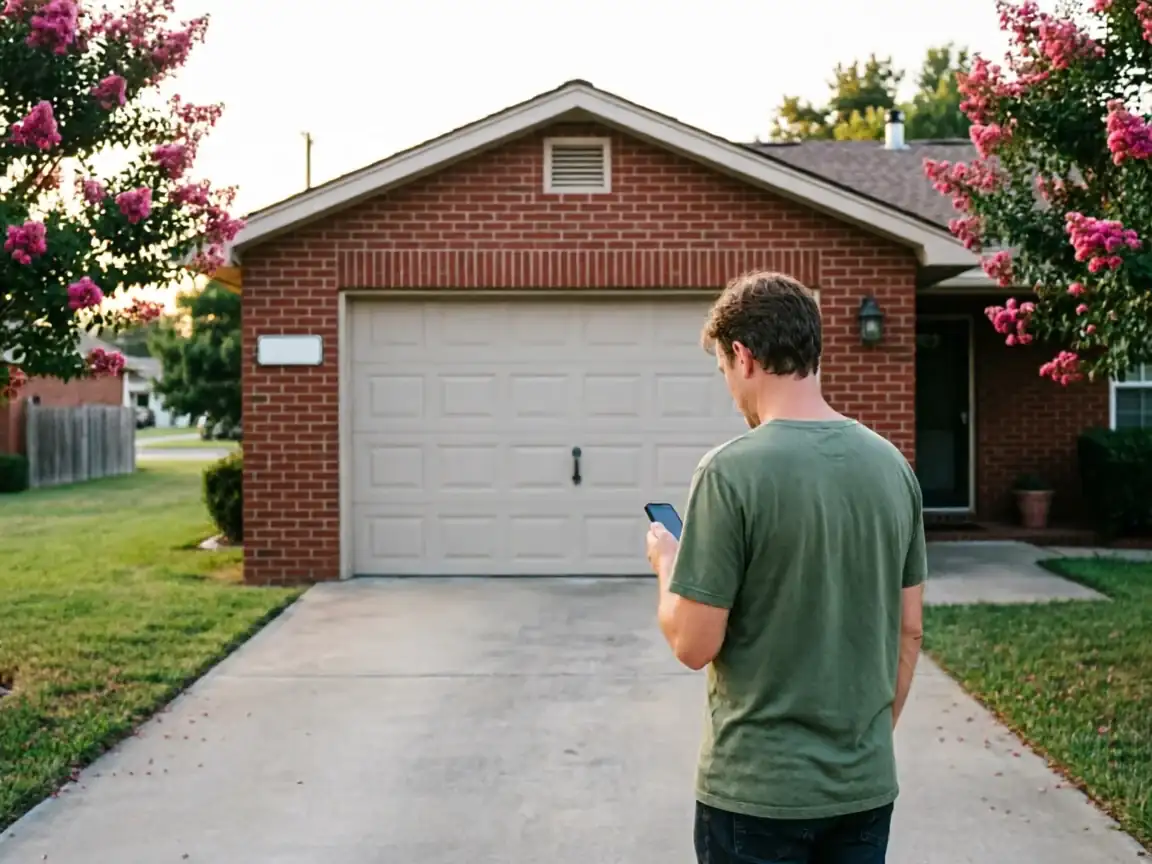
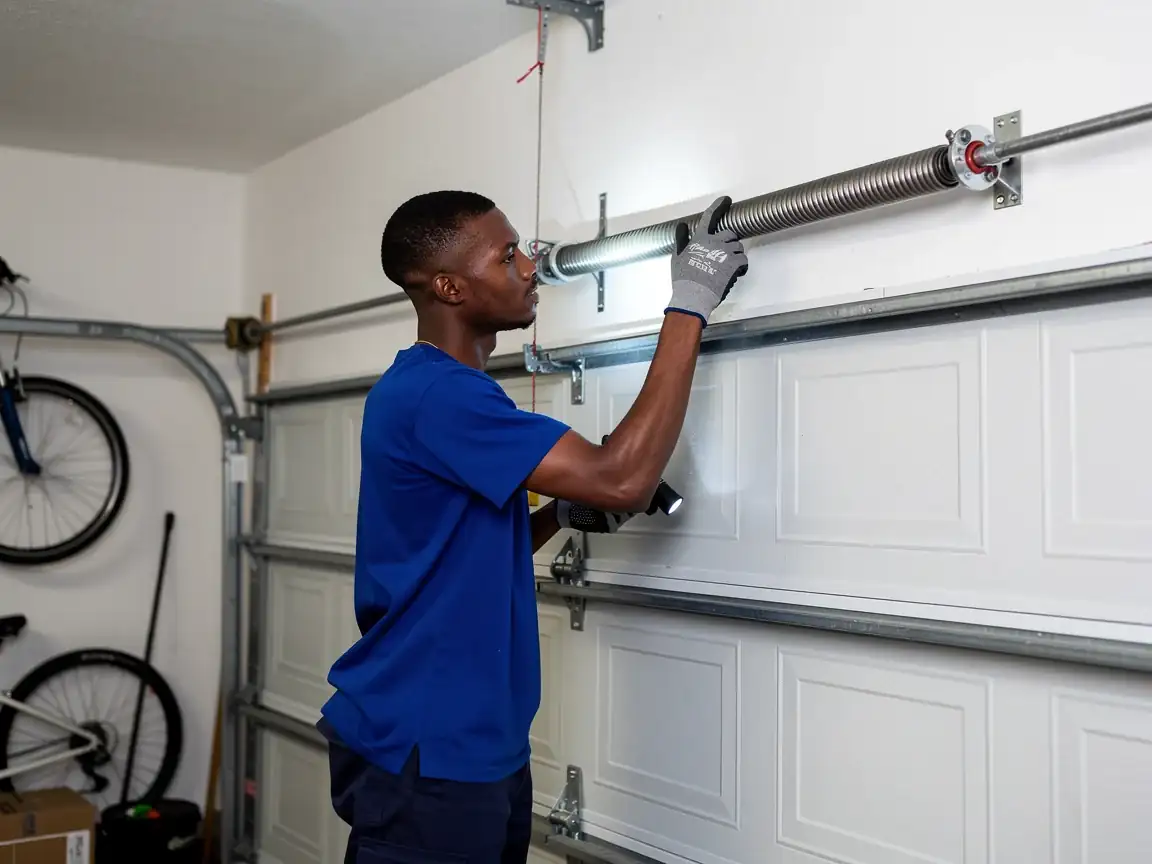
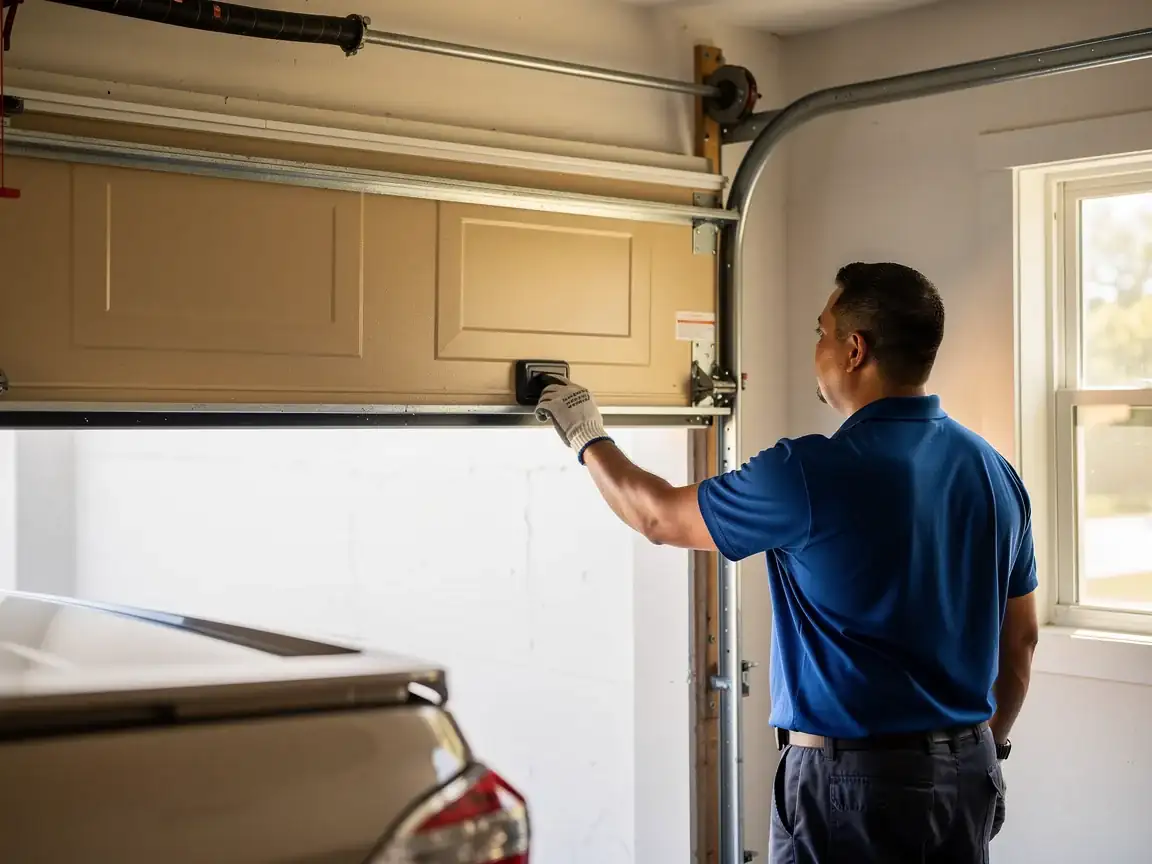
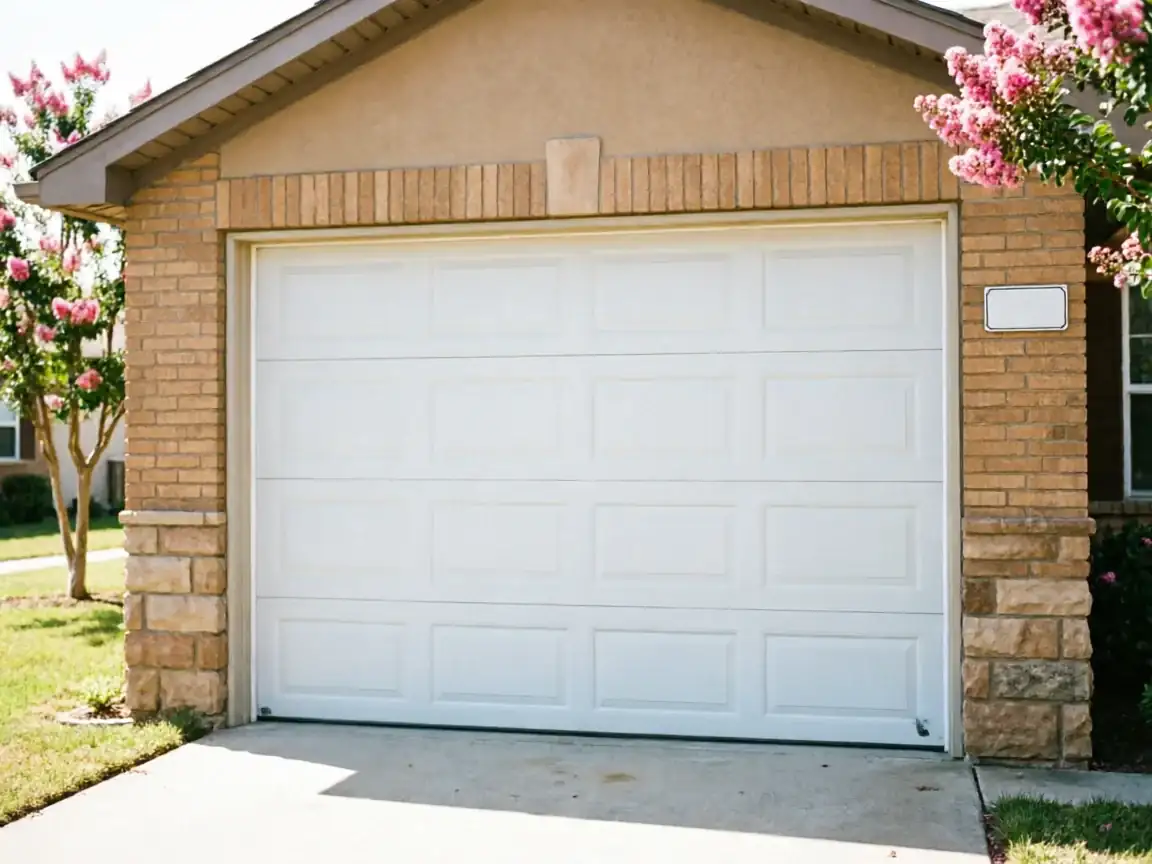
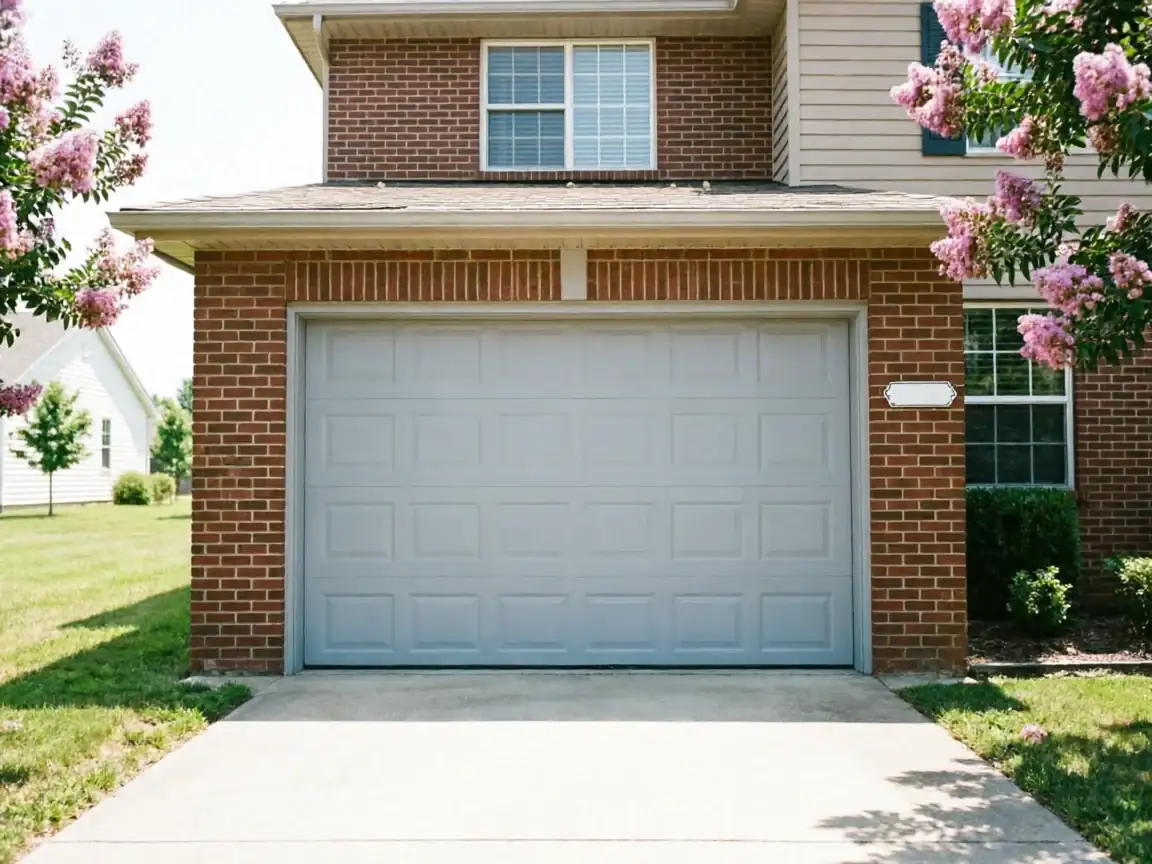
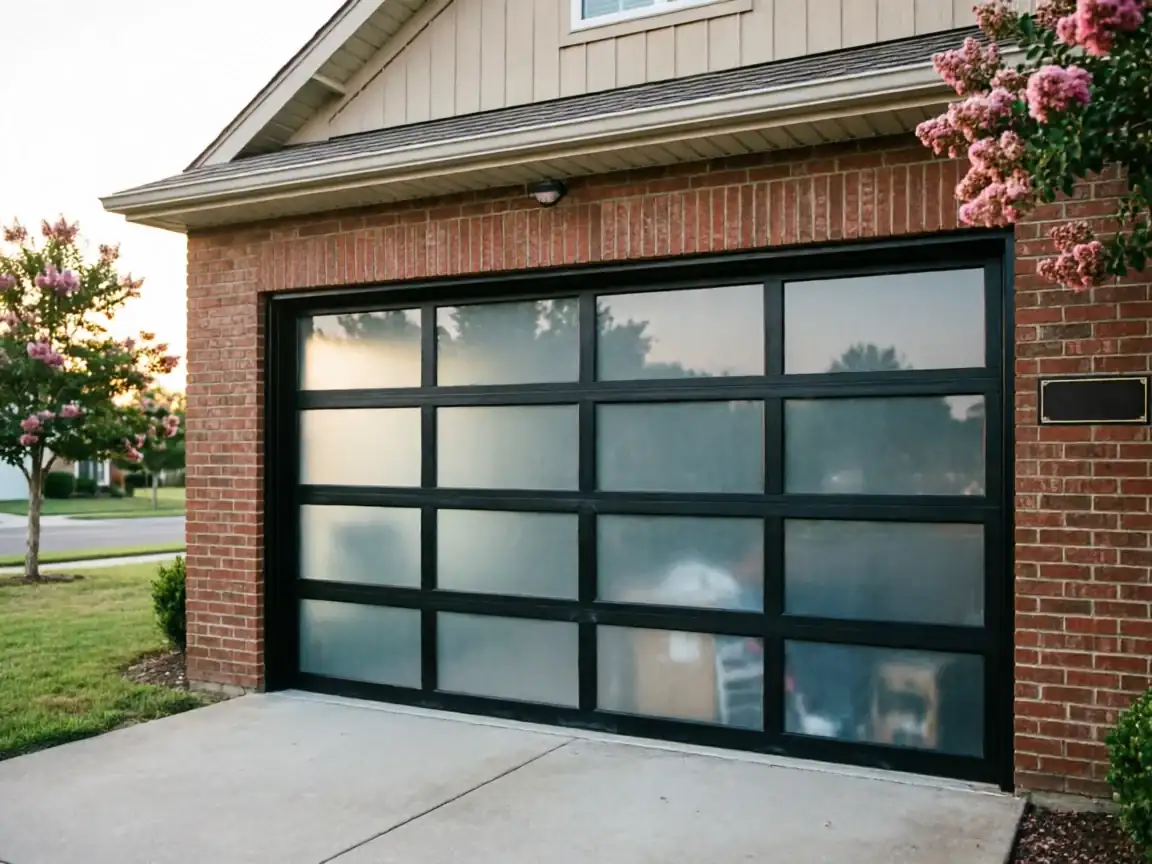
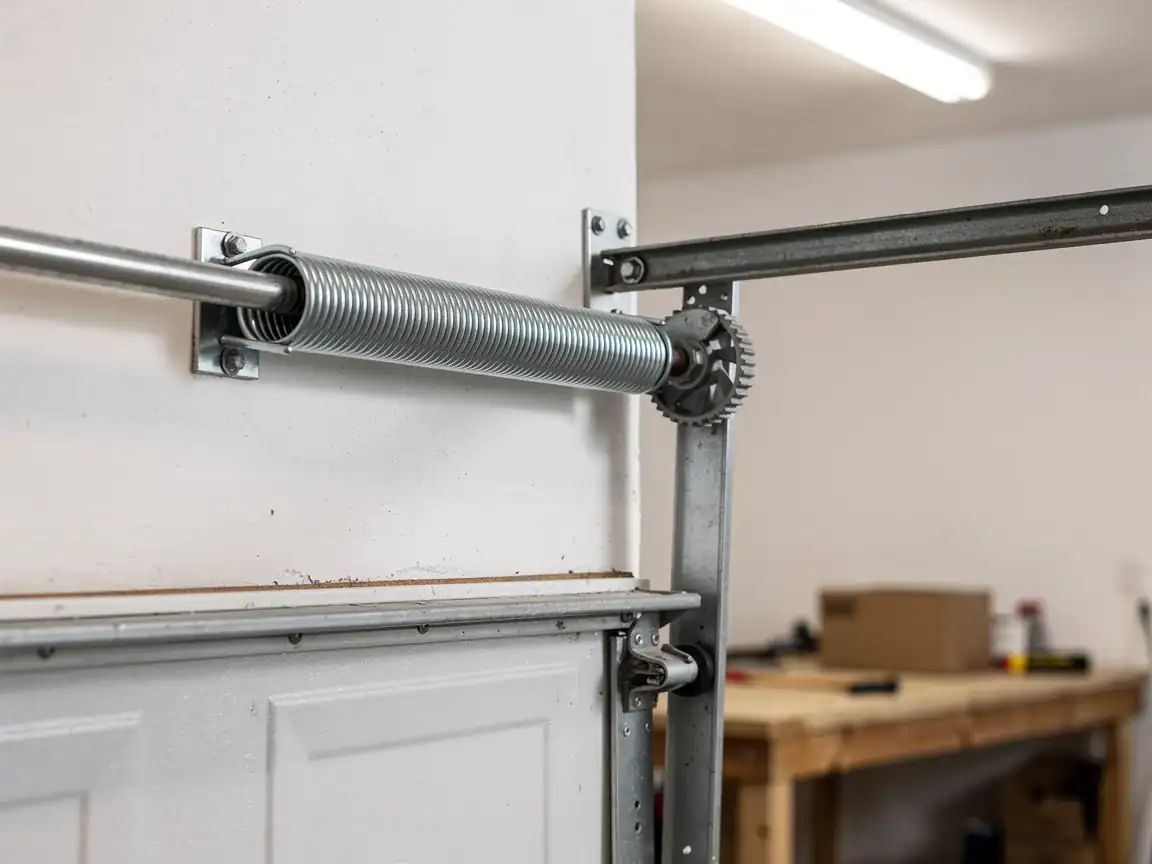
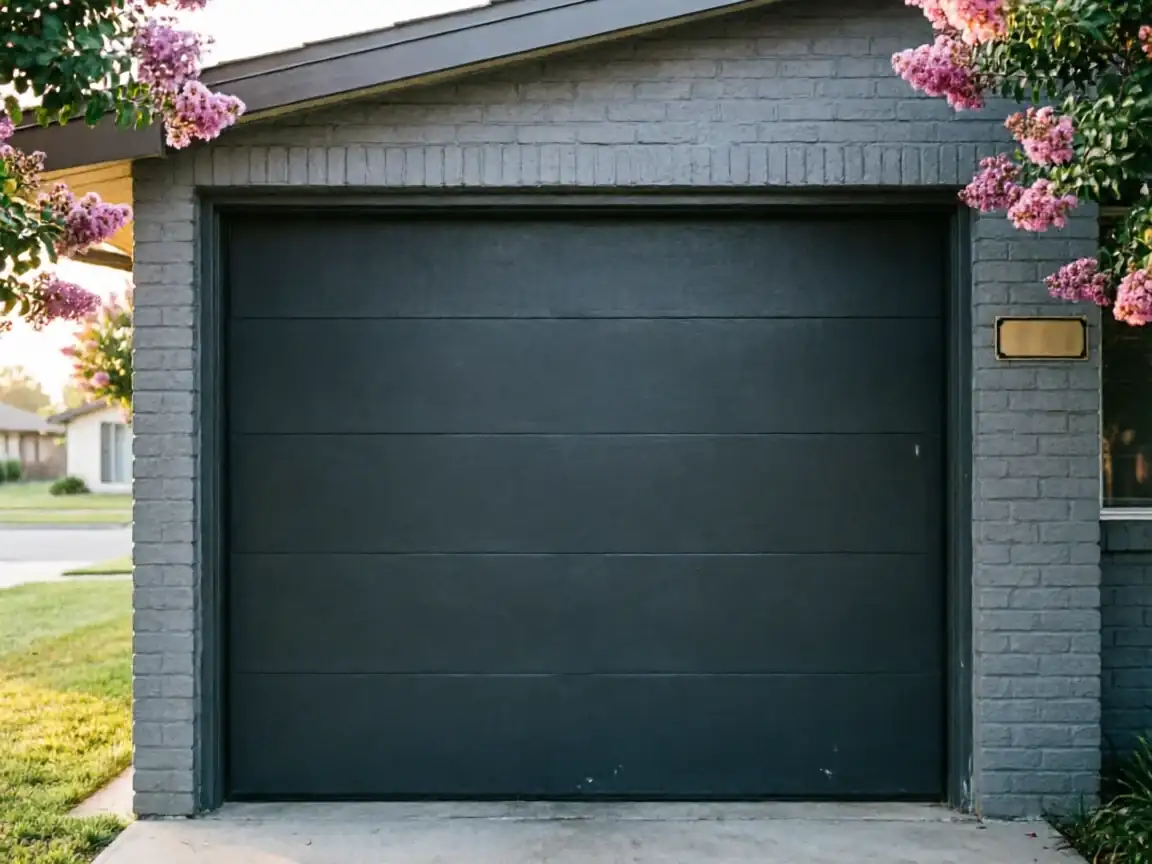
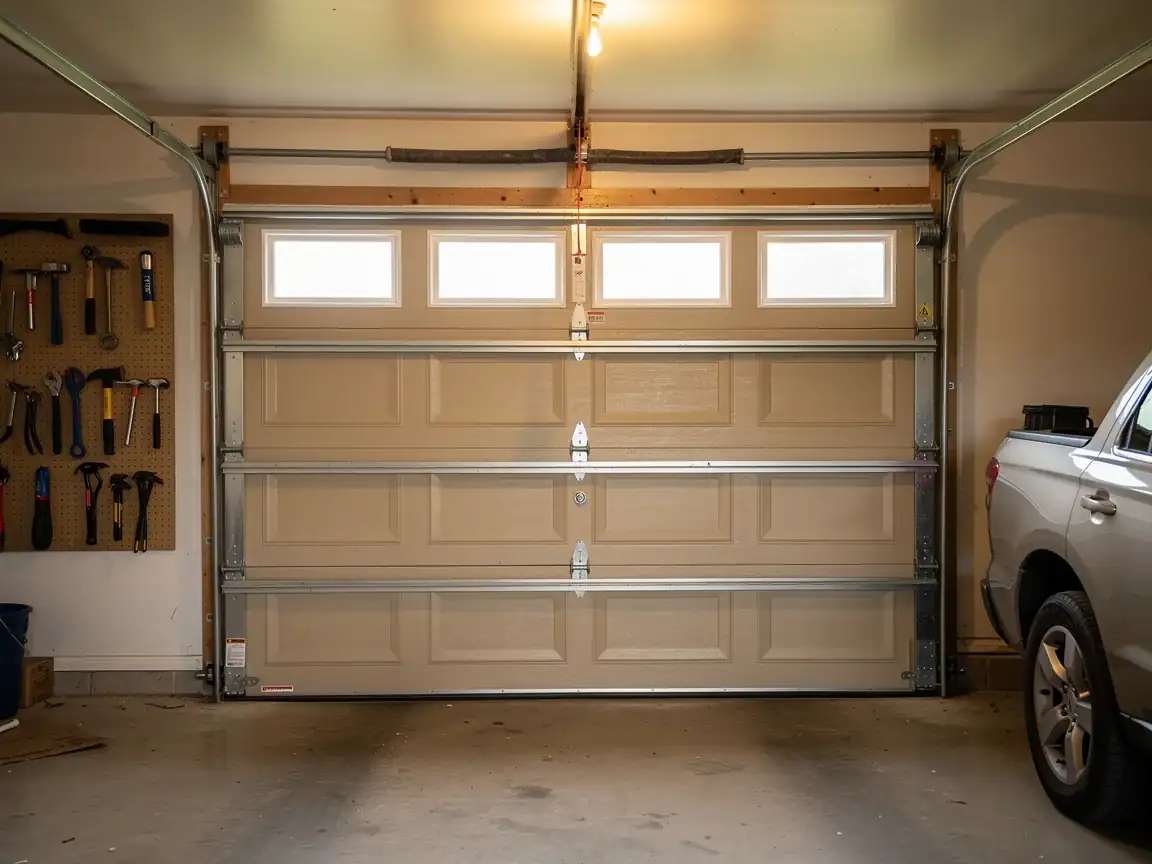
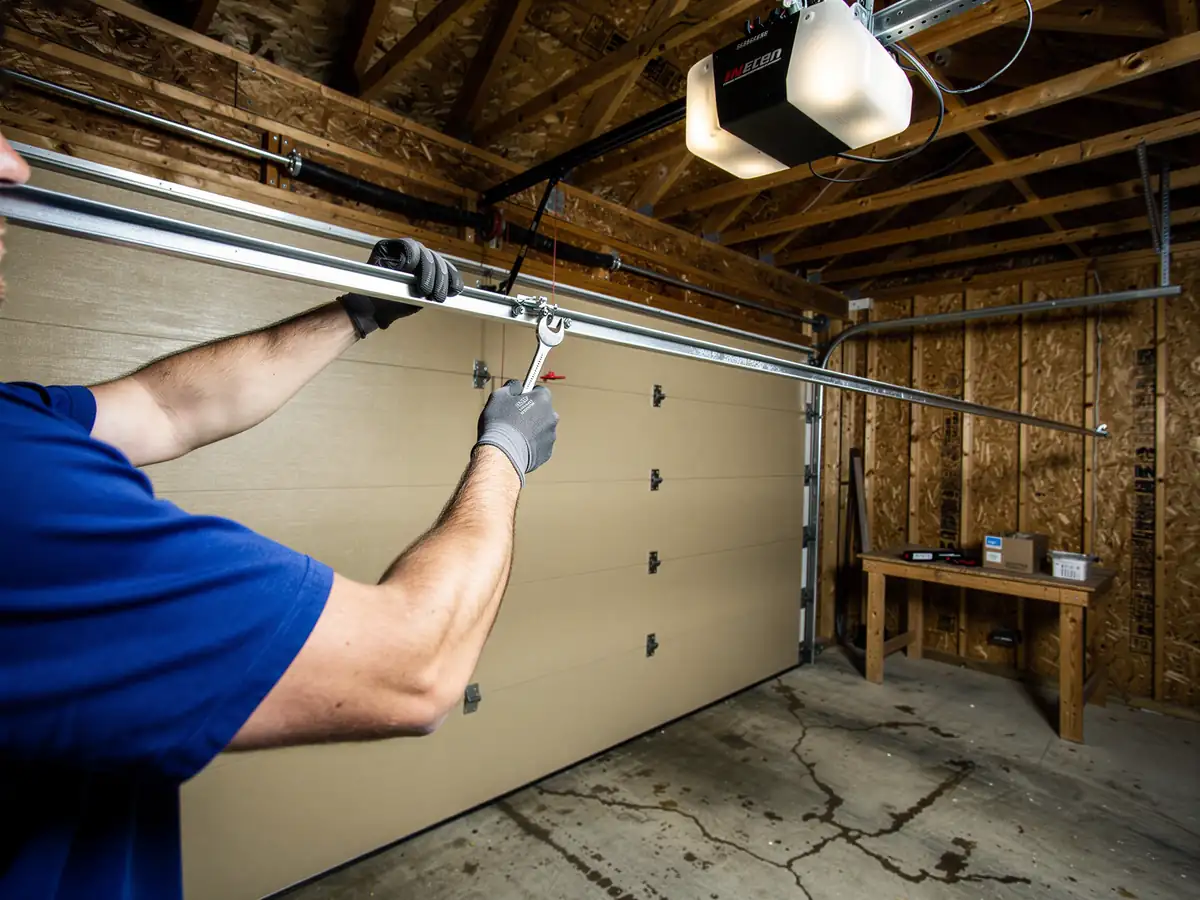
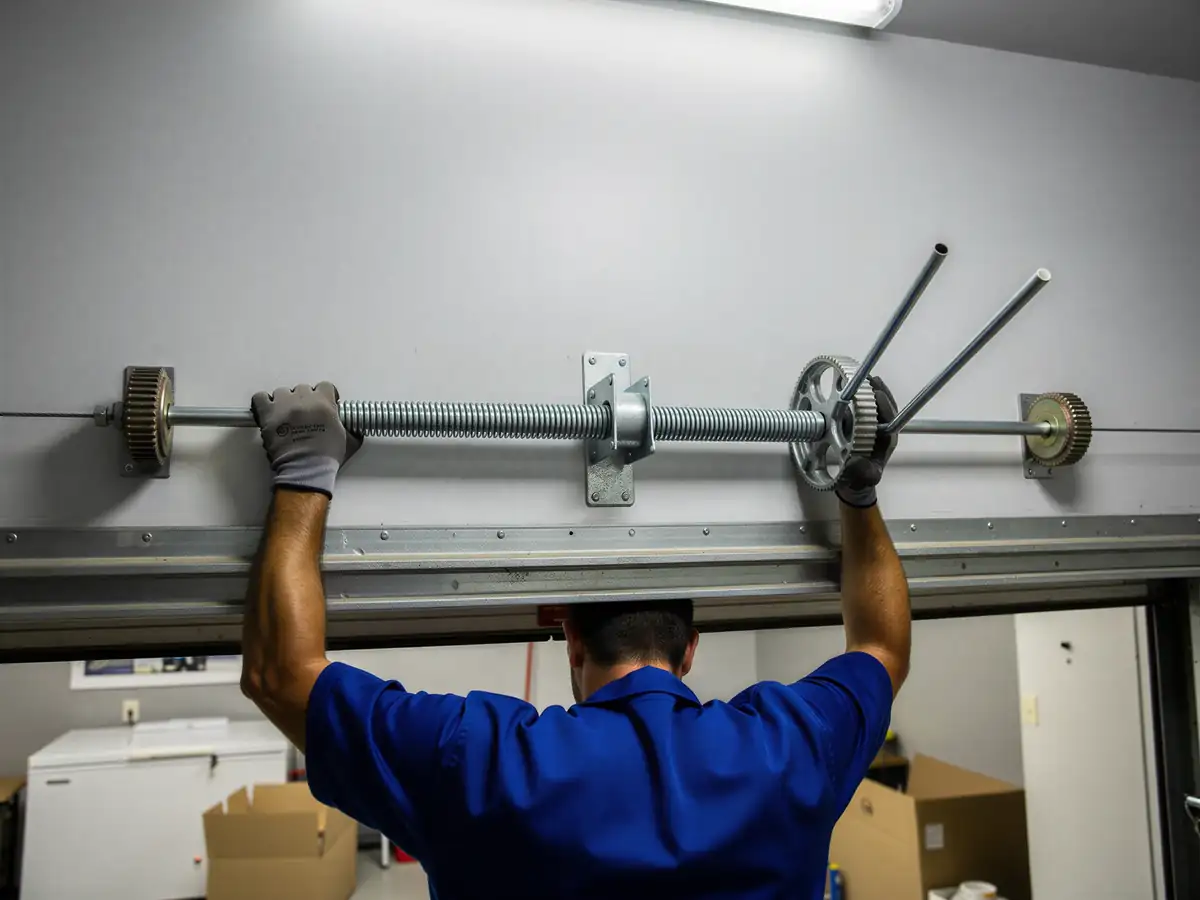
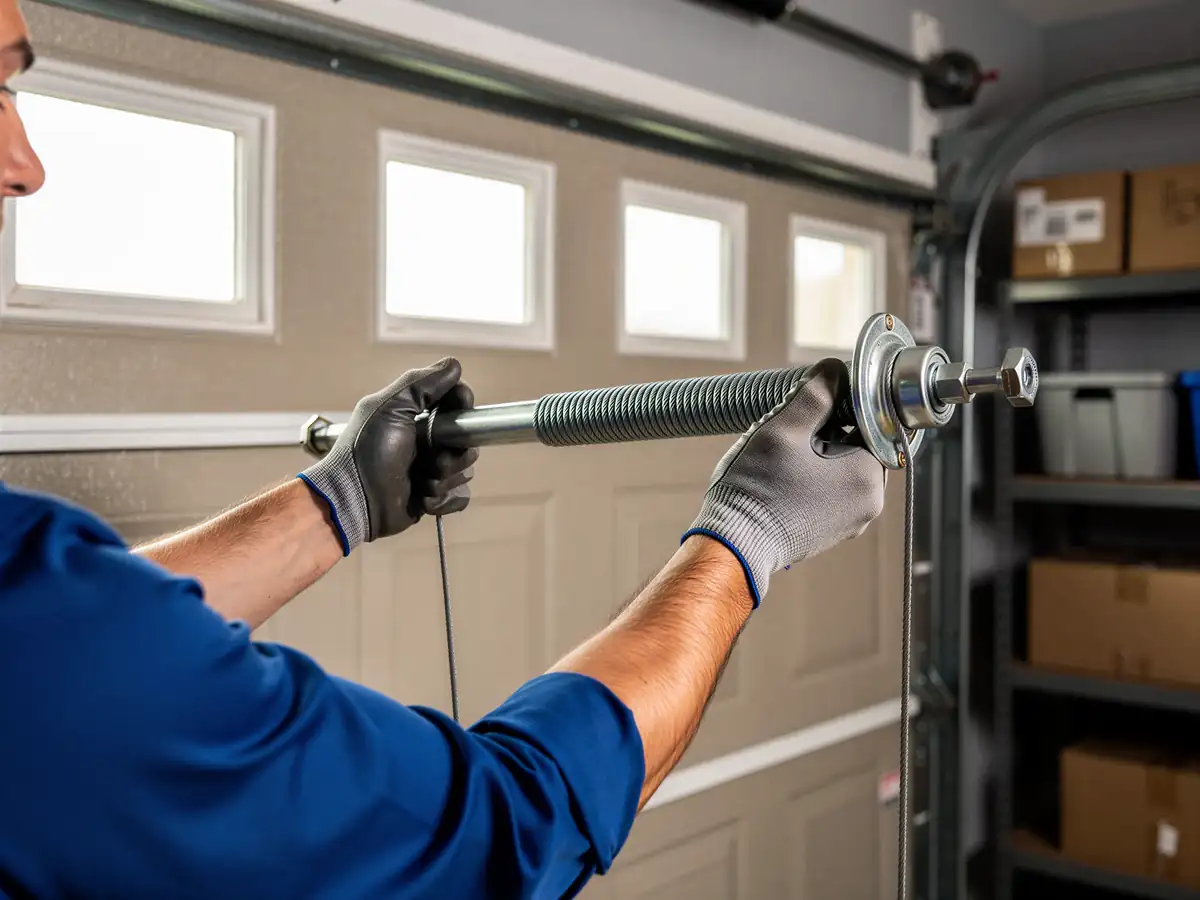
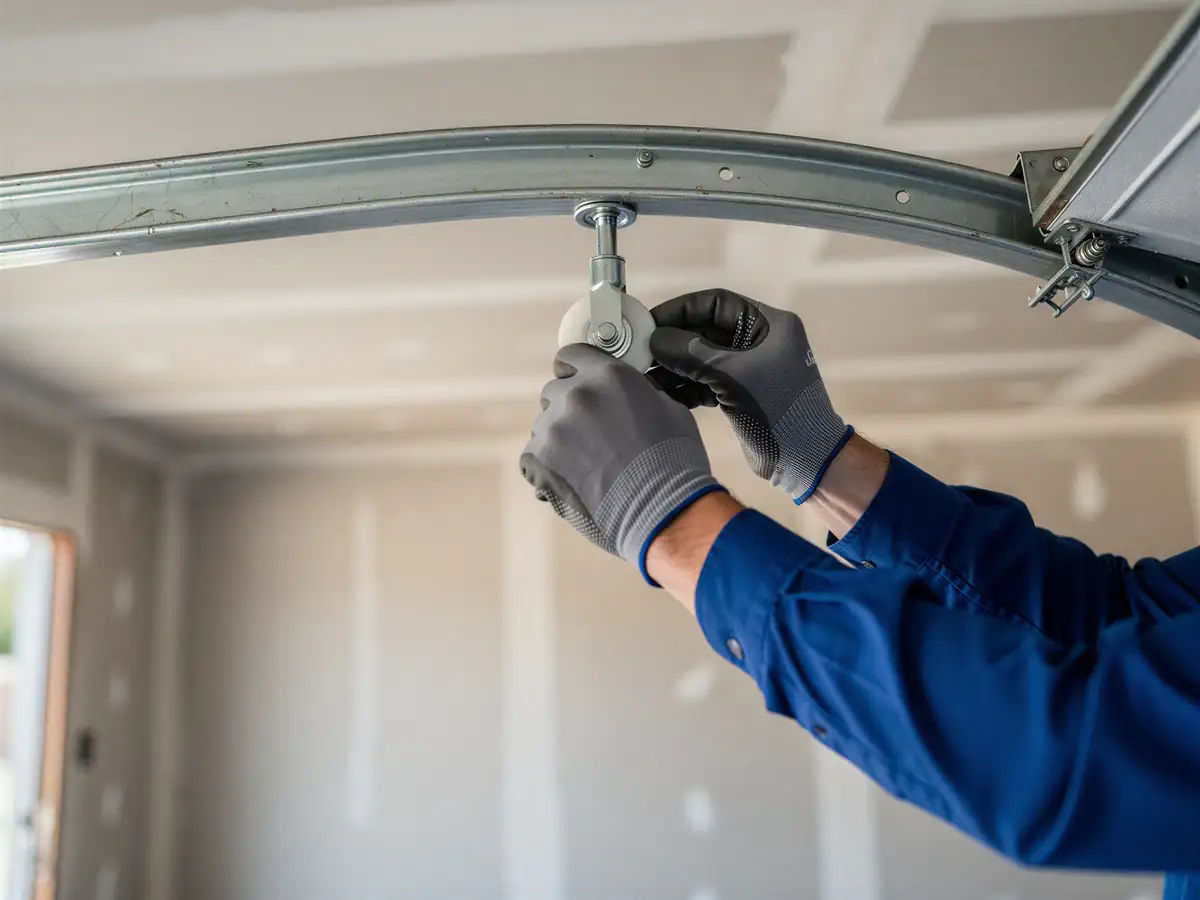
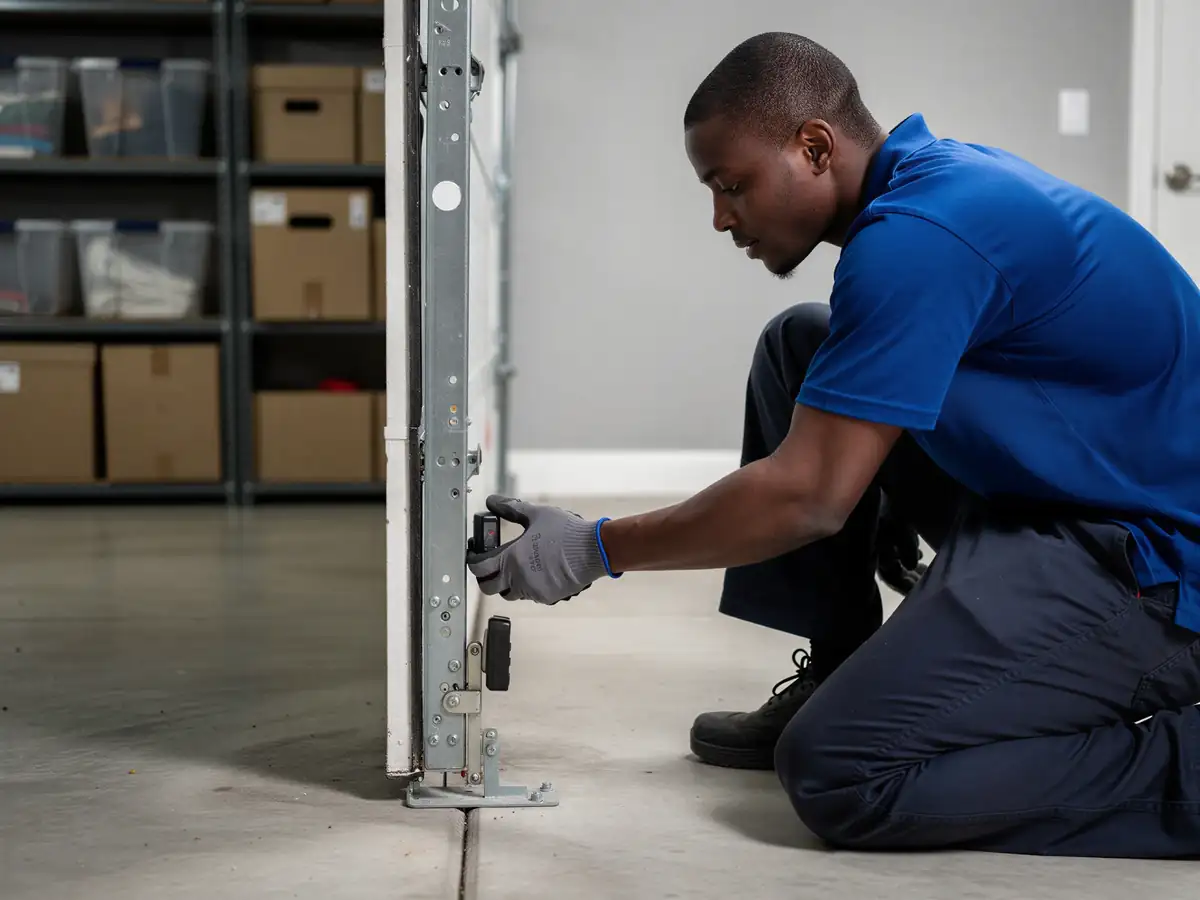
On a 2006-era builder door, the first sign is usually the panel, not the spring. Thin steel skins from that production run dent easily - a bike pedal, a trailer hitch backing in, a basketball off the rim - and once one panel is bowed, the track binds and the opener starts straining on every cycle. The second sign is noise: the stamped-steel rollers that shipped standard on builder-grade doors wear oval over ten-plus years and start rattling in the track instead of rolling through it. Neither of those means the whole door needs to go, but if you're also hearing the opener motor lug hard on lift, that's the spring, and on a double door that size it's not a job to guess at.
Why This Fails Locally
This area sits in a mild climate band with occasional freeze, not the hard freeze-thaw cycling that cracks concrete pads or seizes steel up north, but enough humidity swing to matter. Garage doors here don't fail from cold - they fail from moisture working into the bottom seal and the panel seams over years of swelling and drying. Combine that with builder-grade steel that was never meant to be a 20-year door and you get bottom-panel rust starting from the inside out, usually invisible until the door's already sagging on that corner. It's a slower failure than what you'd see in a harsher climate, which is partly why a lot of Fresno homeowners are only now, with these houses in their second decade, starting to deal with it.
Stocked Parts
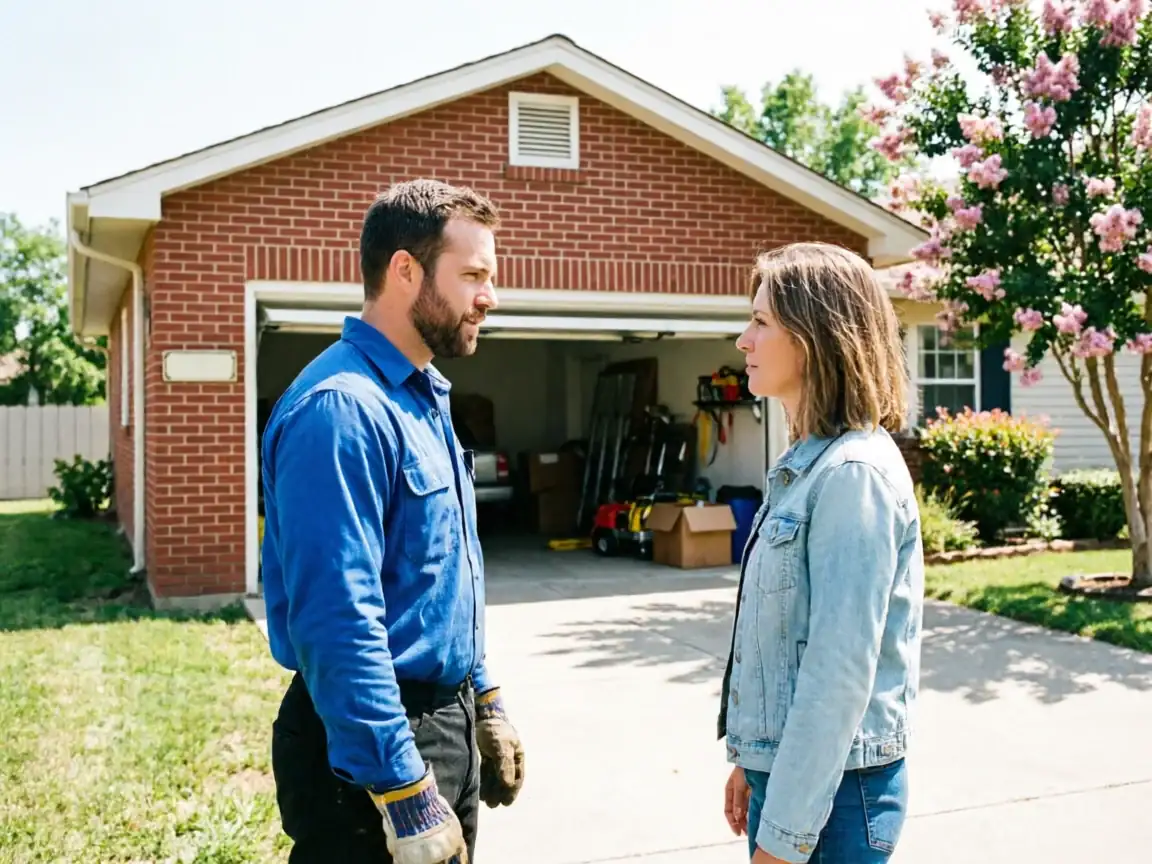
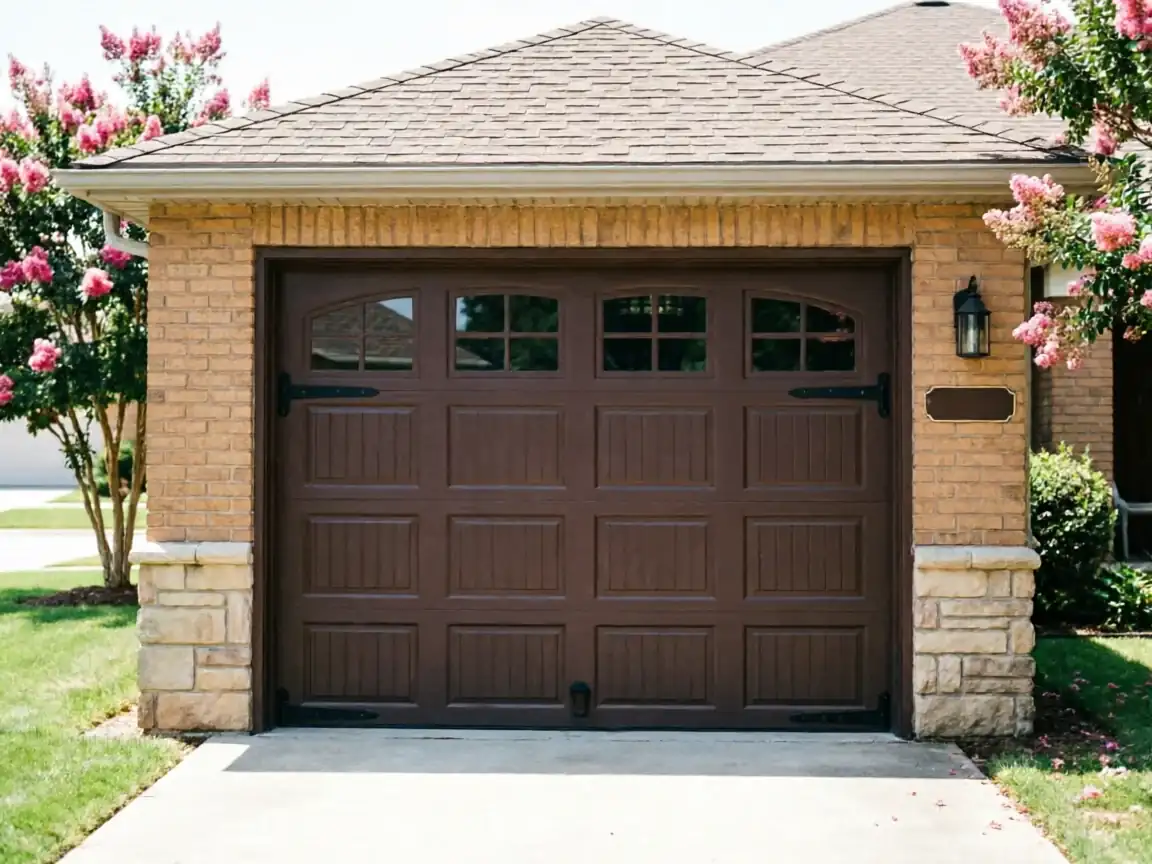
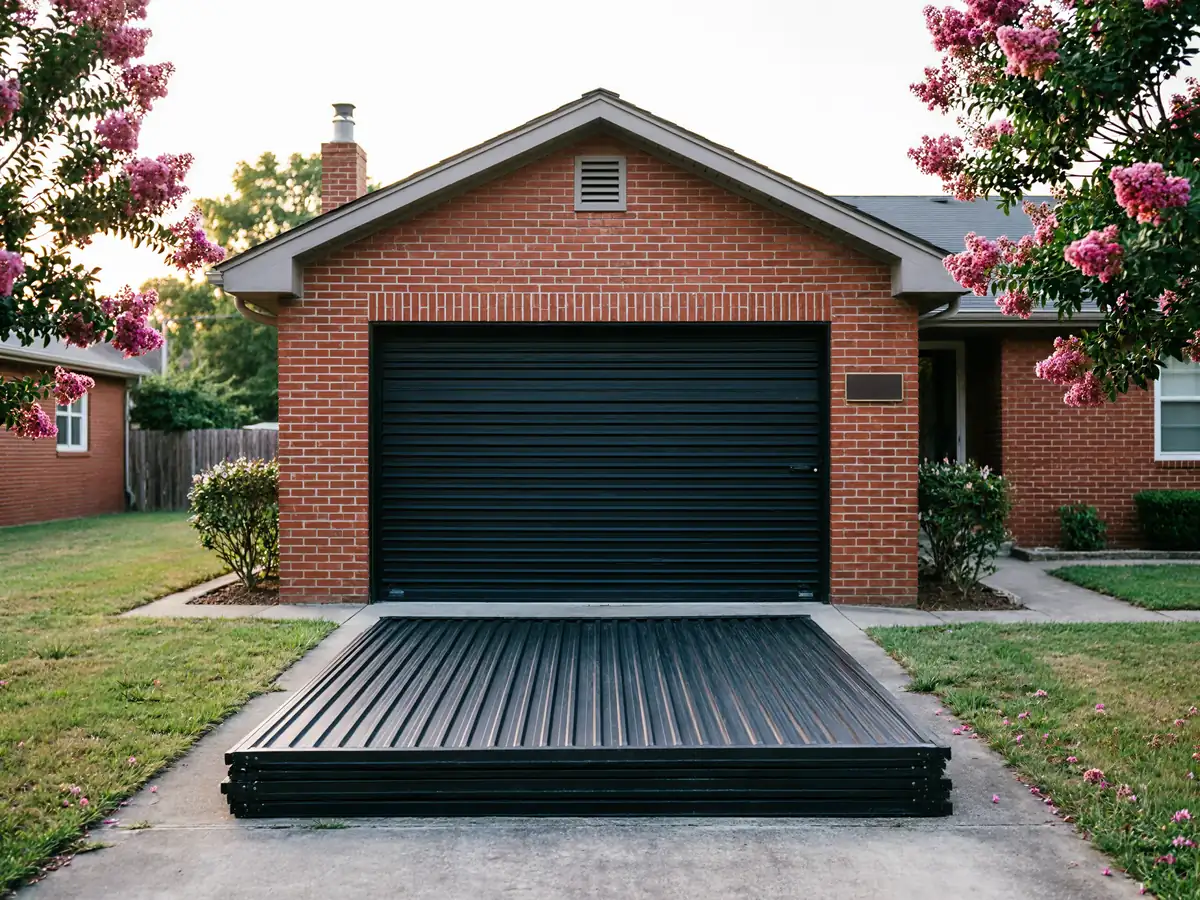
Because so much of Fresno's housing went up in the same building window, the hardware sizes repeat house to house - 16-foot and 9-foot steel sectional openings, standard torsion spring ranges, common roller and cable sizes. That consistency means we can usually carry what a typical Fresno install needs on the truck from Alvin rather than special-ordering. Where it gets slower is custom widths, carriage-style doors, or anything outside the builder-standard sizing - those get ordered in and the timeline stretches.
The DIY Question
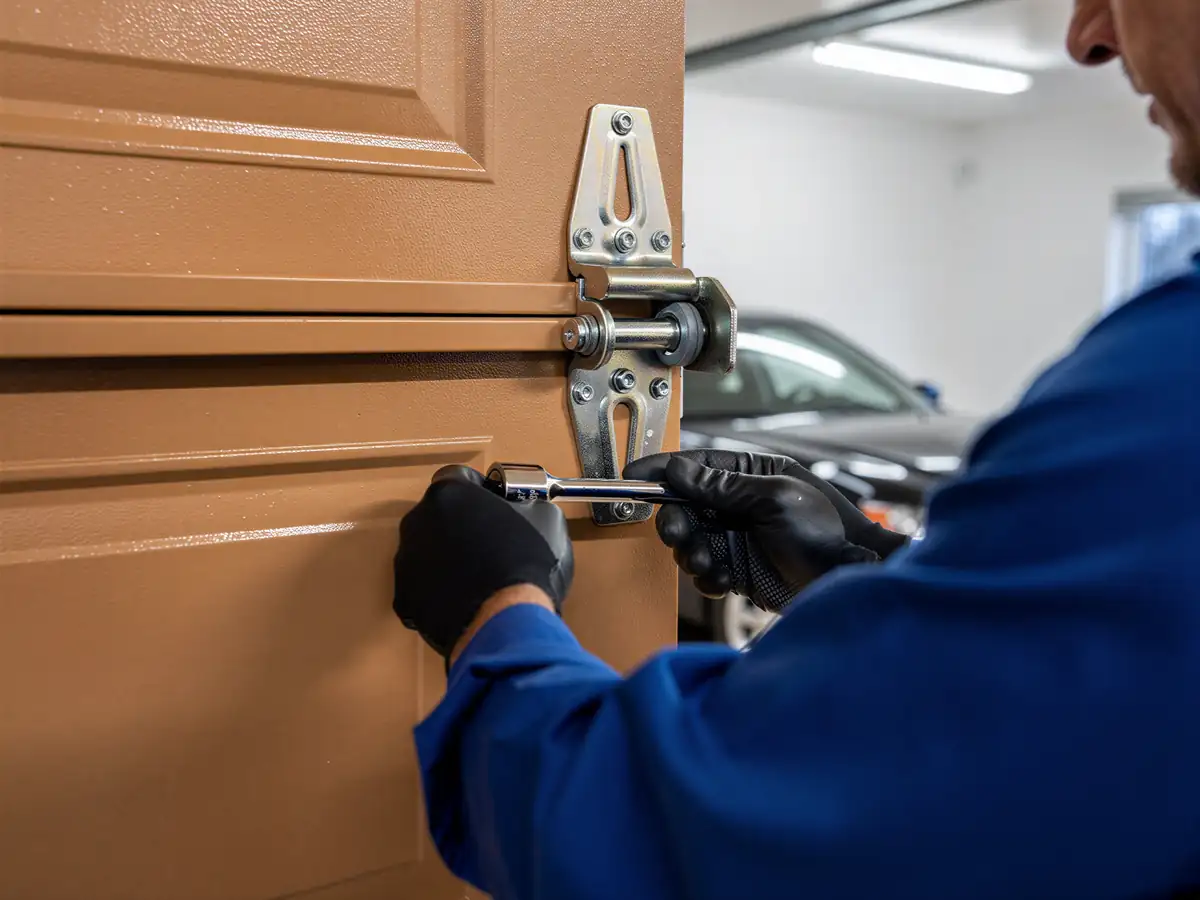
A full door swap on a 16-foot double isn't a solo weekend project, and we'll say that straight: the panel weight and the spring tension on an opening that size are not forgiving of a bad guess. Where it's reasonable to do it yourself is small stuff - weatherstrip, a worn roller here or there, tightening track brackets. Anything involving the spring, the opener mounting, or taking the old door down whole is where the injury numbers come from, and it's also where a mis-sized spring on a wide door turns into a second service call that costs more than doing it right the first time.