Garage Door Repair · Alvin, TX
Garage Door Repair for Alvin's 1980s and 90s Housing Stock
Alvin homes built mostly in the 1980s and 90s are hitting the age where torsion springs and worn rollers fail. Here's why, and what the repair actually involves.
Why This Fails Locally
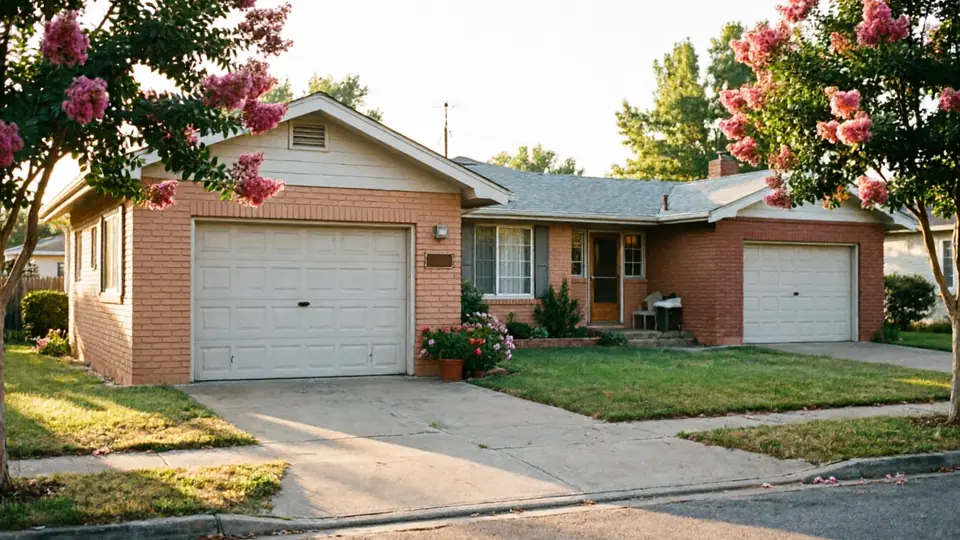
Most of the houses we get called to in this part of the service area went up between 1969 and 2014, with the median landing around 1991. That means a huge share of garage doors and openers out there are coming up on 30-plus years of use, and torsion springs are rated in cycles, not years. A spring that's been doing four to six lifts a day since 1991 is well past its rated life even if nobody's touched it.
The climate here doesn't help. We sit in a mild band with occasional freeze snaps, and that swing matters more than people think. Steel springs and galvanized cable don't love repeated expansion and contraction, especially when a door's been sitting unused and dry through a stretch of warm weather and then gets hit with a cold morning. Lubricant that was fine in August gets stiff in January, rollers bind, and a spring that was already fatigued takes the extra load and snaps.
We're not talking about one freak storm. It's the slow wear of 20-30 year old hardware meeting a climate that isn't brutal but isn't stable either, in a service area where the 1980s and 90s building boom means thousands of doors are aging out at roughly the same time.
Where This Job Goes Sideways
The common mistake is treating a broken spring as an isolated part. On a door from that 1980s-90s construction wave, the spring usually isn't failing alone - the cables, the end bearing plates, and sometimes the rollers have been wearing at the same rate since the house was built. Replace just the spring and leave 30-year-old frayed cable on the drum, and you're back out in a few months for a cable snap instead.
We also see openers get blamed for spring problems. If the torsion spring is weak, the opener motor takes on load it was never built to carry, burns out the gears trying to compensate, and homeowners end up replacing an opener that was never the actual problem. Diagnosing the spring tension correctly before anything else gets touched is what keeps this from turning into two repairs instead of one.
The other sideways move is DIY spring work. Torsion springs are under real load, and winding or unwinding them without the right bars is one of the more dangerous jobs in home repair. We don't cut corners here - if a customer wants to attempt it themselves, that's their call, but we won't talk anyone through it over the phone.
What the Repair Takes
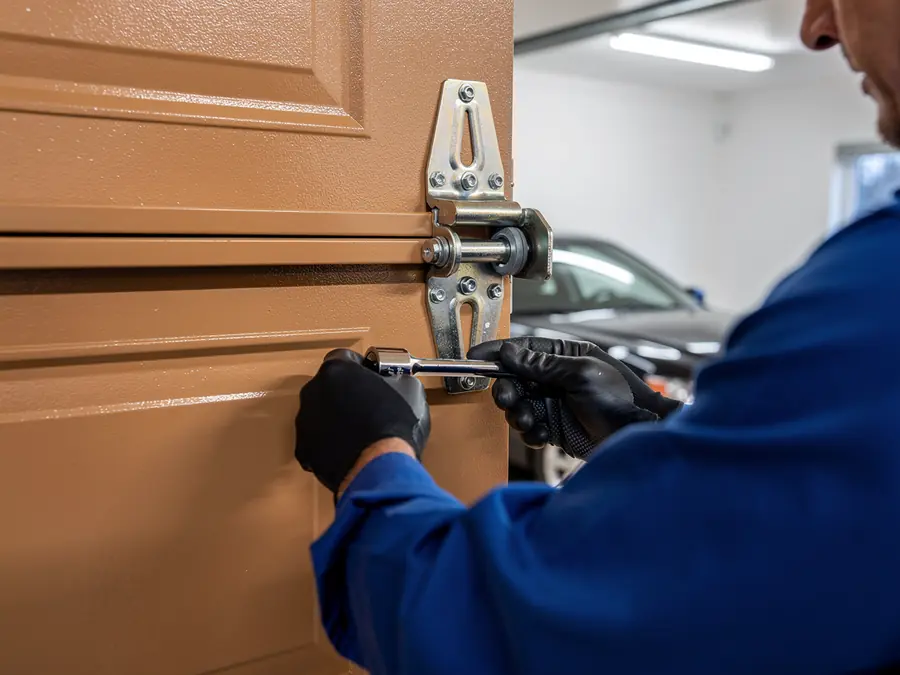
A straight torsion spring replacement on a single door is usually a same-visit job once we've confirmed the spring size and cycle rating match the door weight - doors from the 1980s-90s construction era are often a standard size, but not always, so we measure rather than assume. We also check the cables, drums, and bearing plates while we're in there, since those parts age at the same rate as the spring on a house this old.
If the opener has been compensating for a weak spring for a while, we'll test it under correct spring tension before recommending anything further - sometimes the motor's fine once the spring is doing its job again, sometimes the gears are already stripped and no amount of spring work fixes that. We're upfront when a repair isn't worth it compared to replacement, particularly on doors old enough that parts are getting harder to match.
We stock common torsion spring sizes for the door ages typical to our service area's 1991-median housing stock. Less common sizes, or doors with older or discontinued hardware, sometimes mean a short parts wait - we'll tell you that up front rather than promise a same-day fix we can't back up.
How It Shows Up
The warning signs are usually there before the spring actually breaks. A door that's suddenly heavier to lift by hand, an opener that strains or makes a grinding noise partway through the cycle, or a visible gap in the spring coil on top of the door - all of these point to a spring near the end of its life rather than a sudden, random failure.
In households around here, the pattern we see most is a loud bang, often first thing in the morning after a cold snap, followed by a door that won't open at all or that the opener tries and fails to lift. That timing lines up with the freeze-thaw swings in our climate band hitting hardware that's already fatigued from decades of cycles.
If your door is stuck halfway, the cable has come off the drum, or the opener is running but the door isn't moving, don't keep hitting the button - that's how a bad spring turns into bent track or a damaged opener. Call before you force it.
FAQ
Questions about this
Why do garage door springs seem to break more in winter around Alvin?
It's less about one cold event and more about accumulated wear meeting a swing in temperature. Our climate band is mild with occasional freezes, and that freeze-thaw cycling stresses steel springs and cable that have already been weakened by years of regular use - common on houses from the 1980s-90s construction wave in this area.
How do I know if it's the spring or the opener?
If the door is hard to lift by hand with the opener disconnected, it's almost always the spring. If it lifts fine by hand but the opener struggles or makes noise, the motor or gears may be the issue - sometimes caused by it compensating for a weak spring over time.
Is spring replacement something I can do myself?
We don't recommend it. Torsion springs hold significant stored energy, and winding or unwinding them without the right bars is genuinely dangerous. We won't walk anyone through it by phone, and we'd rather you call us for that part of the job.
How old does a garage door spring usually last?
Springs are rated in cycles, not years, so it depends on how often the door's used. Given that much of the housing in our service area dates to the 1980s and 90s, a lot of original hardware is well past its rated cycle count even if it still looks fine.
Tell us what your door is doing.
We serve Alvin, TX and nearby communities. Every job starts with a diagnosis, so you know what failed before any work begins.