Spring Repair · Alvin, TX
Garage Door Spring Repair for Alvin Homes
Torsion and extension spring repair for Alvin homes built mostly between 1969 and 2014, where humidity and original hardware wear springs out early.
Why This Fails Locally
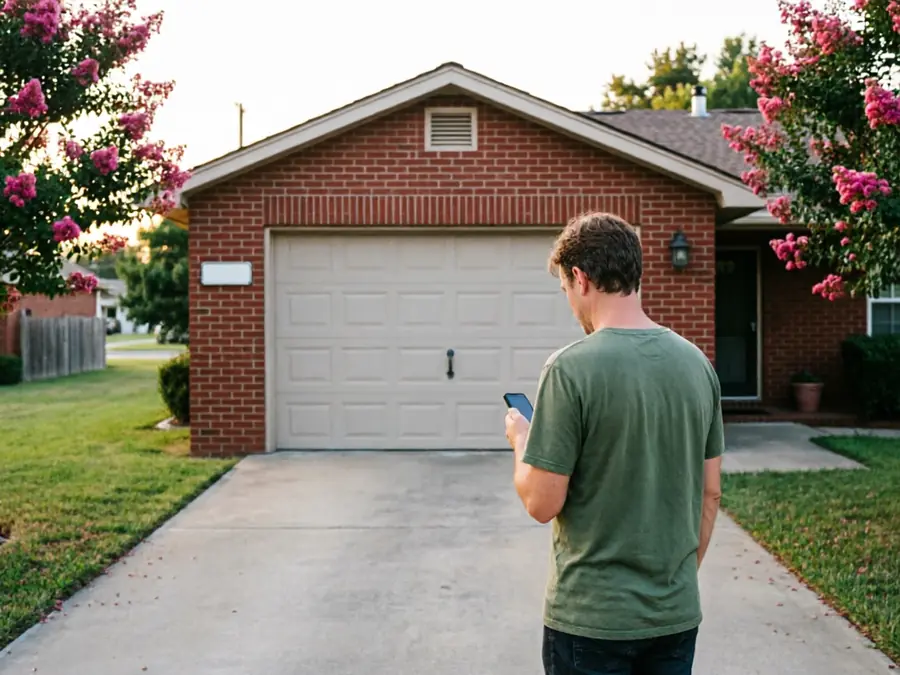
Most of the housing stock across this service area went up between 1969 and 2014, with the median build year sitting around 1991. That means a huge share of garages still run the torsion or extension springs that came with the house, or a direct swap installed decades ago with the same gauge wire. Springs are rated in cycles, not years, and a spring that's 25-30 years old has usually seen more open-close cycles than its rating ever accounted for, especially on a two-car door opened several times a day.
The climate here doesn't help. This is a mild band with occasional freeze, which sounds easy on hardware compared to real winter country, but the bigger factor is humidity swinging through the year. Steel spring wire corrodes from the inside of the coil out, and you often can't see it until the coil snaps. Combine 1980s-90s stock across the 18 named communities in this area with that humidity cycle, and spring failure is one of the most common calls we get - not because people neglect their doors, but because the hardware is simply reaching the end of its rated life around the same time across a lot of houses built in the same stretch of years.
Where This Job Goes Sideways
A broken spring job goes wrong in a few predictable ways. The first is using the wrong wire size or wind direction - torsion springs are matched to door weight and drum size, and a mismatched spring either won't lift the door evenly or will wear out again in a fraction of the time. On older houses from that 1969-2014 build window, the original spring spec isn't always printed anywhere obvious, so guessing instead of measuring the door and shaft is how a repair turns into a callback.
The second way it goes sideways is treating a spring call as a parts swap only. If a cable has started fraying or a bearing plate is worn from running with a weak spring too long, replacing just the spring leaves a second failure waiting to happen within weeks. We check the cables, drums, and center bearing any time we're already up on a torsion bar, because it's the same labor to catch it now versus a second trip later.
The honest limitation: if a door has two springs and one has broken, we replace both. A mismatched pair - one old, one new - wears unevenly and one will go again soon after. That's not an upsell, it's how torsion systems are built to work.
What the Repair Takes
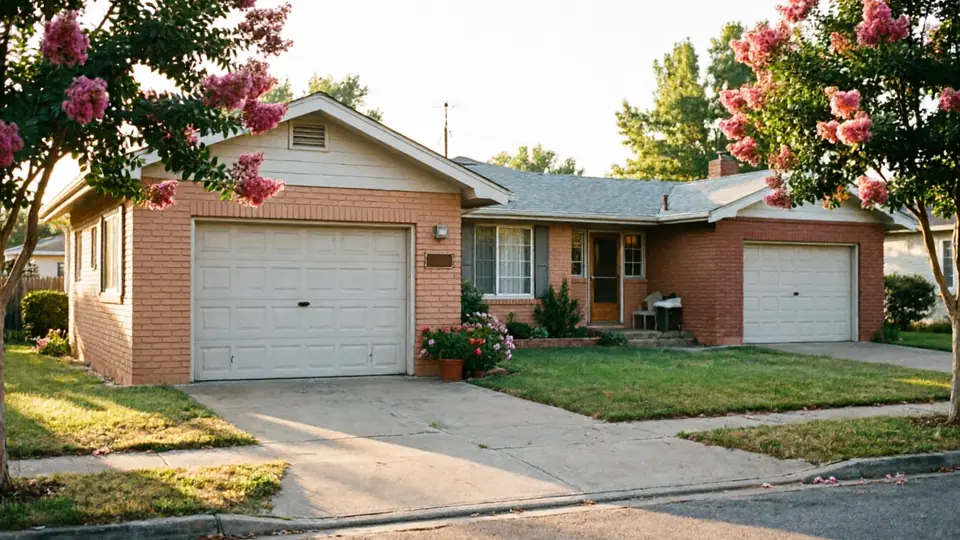
Torsion spring replacement means unwinding the broken spring under tension, pulling the old spring and bearings off the shaft, fitting the correct wire-size spring for the door's weight, winding it to the right number of turns, and checking balance by hand with the opener disconnected. A door that's properly balanced should stay put at waist height when you let go of it - if it drifts up or drops, the spring tension isn't right yet.
Extension spring jobs, found on some older or lighter doors in this area's 1980s-90s stock, involve replacing the stretched springs along the horizontal tracks and making sure the safety cables are in place so a spring can't whip loose if it breaks again later. Either way, we test the door through a full open-close cycle and recheck the opener's force settings, since a new spring changes how hard the opener has to pull.
How It Shows Up
The most common sign is a door that won't lift at all, or an opener that strains, clicks, and reverses partway up - that's the opener trying to do a spring's job. You might also hear a loud bang from the garage, which is usually the spring letting go, sometimes with the door sitting mid-cycle afterward. A visible gap in the coil, or one side of a two-spring torsion bar clearly slack compared to the other, is as plain a sign as it gets.
Some owners notice a slower change first: the door feels heavier to lift by hand, or the opener starts running longer and hotter than it used to. That's a spring losing tension before it fully breaks, and it's worth a call before it fails at the worst possible time - like leaving for work with the car trapped inside.
FAQ
Questions about this
How do I know if it's the spring and not the opener?
Disconnect the opener using the release cord and try lifting the door by hand. If it feels very heavy, won't stay open on its own, or drops as soon as you let go, the spring has lost tension or broken. If it lifts easily and stays put, the issue is more likely the opener itself.
Why do both springs need replacing if only one broke?
On a two-spring torsion system, both springs wear at close to the same rate since they've run the same number of cycles. Replacing only the broken one leaves a mismatched pair - the older spring usually fails again within weeks, so we replace both at once.
Is it safe to leave a broken spring alone for a few days?
Not recommended. With a broken spring the opener is doing all the lifting work it wasn't designed for, which strains the gears and can damage the opener too. The door is also harder to control by hand and can drop unexpectedly.
Why does Alvin's area see so many spring failures on older doors?
A lot of homes here were built between 1969 and 2014, with much of the stock from the 1980s and 90s. Springs are rated in cycles, and houses of that age have usually put their original or first-replacement spring through more open-close cycles than it was built for, especially with the area's humid swings.
Tell us what your door is doing.
We serve Alvin, TX and nearby communities. Every job starts with a diagnosis, so you know what failed before any work begins.