Maintenance · Alvin, TX
Garage Door Maintenance Built Around Alvin's Housing Stock
Alvin homes built 1969-2014 face spring fatigue and track rust from Gulf Coast humidity. Maintenance tuned to this area's housing stock and mild-freeze climate.
Why This Fails Locally
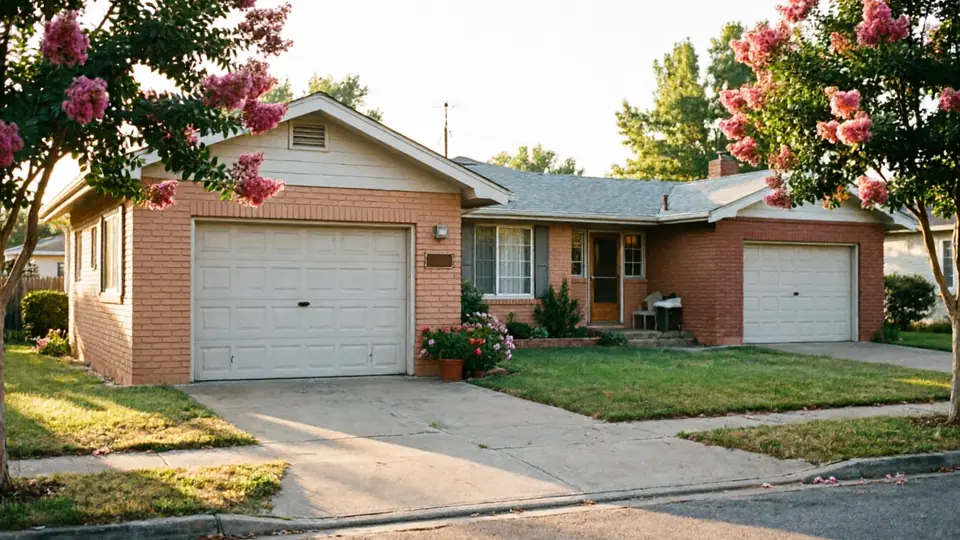
Most houses across this service area went up between 1969 and 2014, with the bulk of the stock dating to the 1980s and 90s, spread across roughly 18 named areas. That means a lot of doors are running original or first-replacement hardware that's now 25 to 40 years old - springs, rollers, and cable that were sized for a door that's gotten heavier with age as panels sag and weatherstripping adds drag.
The climate band here is mild with occasional freeze, which sounds easy on equipment compared to true cold-weather markets, but it isn't. Humidity swings and periodic cold snaps mean steel hardware goes through repeated condensation cycles instead of staying dry and stable. Torsion springs lose temper faster under that kind of cycling than they would in a drier, steadier climate, and track hardware corrodes from the inside of the mounting holes out, where you can't see it until a bracket pulls loose.
An un-serviced door in a market like this doesn't fail because of one big storm. It fails because nobody rebalanced the spring tension or lubricated the rollers while the house quietly settled and the hardware quietly rusted. That's a maintenance gap, not a manufacturing defect, and it's the single most common reason we get called out here.
Where This Job Goes Sideways
The trouble spot is almost always the gap between what a homeowner can see and what's actually wearing out. A door that still opens and closes looks fine. Underneath that, a torsion spring built for 1990s door weight is carrying a heavier insulated replacement panel installed later, and nobody recalculated the spring cycle count for the new load.
We also see track alignment drift in houses from this era because slab foundations in this region settle unevenly over 20-plus years, and the door frame racks slightly out of square. The door still runs, but the rollers ride the edge of the track instead of the center, which accelerates wear on both the roller and the track lip.
The other common failure point is the opener's force setting. On older openers paired with a heavier door, the force gets cranked up over the years to compensate for binding, which masks the real problem - a worn roller or a spring that's lost tension - until the cable finally snaps or a panel buckles. By the time a homeowner notices, the fix is bigger than it needed to be if someone had caught the misalignment two years earlier.
What the Repair Takes
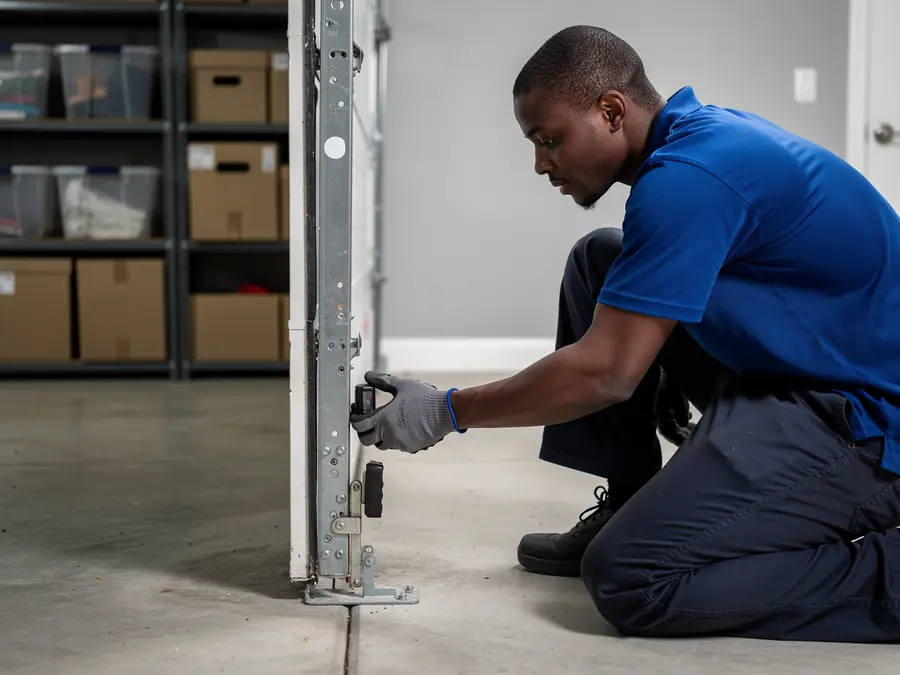
A proper maintenance visit on a door from this housing stock starts with spring tension, not lubrication. We check cycle count against door weight, because a door that's been upgraded with heavier insulated panels needs a spring rated for that weight, not the one that shipped with the house in the 80s or 90s.
From there we check track plumb against the frame, since foundation settling is common across houses in this range and the fix is usually a bracket adjustment, not a new track. We inspect roller and hinge wear, check cable fray at the drum, and reset opener force and limit settings to match the door's actual resistance rather than whatever got dialed in to paper over a problem years ago.
Here's the honest limit: if the door has already racked badly enough to bind in the opening, maintenance won't fix that. At that point you're looking at a track or panel replacement, and we'll tell you that straight instead of running a tune-up that won't hold. Maintenance works when it catches wear early - it's not a substitute for a repair that's already overdue.
How It Shows Up
The earliest sign is usually a door that sounds different before it looks different - a grinding note on the way up, a slight hesitation at the halfway point, or a thump instead of a smooth stop at the top. In this area, that's often the spring giving the first signal it's past its tension range for the door's current weight.
A second common sign is the door drifting slightly off-level as it closes, visible as one side touching the floor before the other. That points to uneven track wear, which tracks with the settling pattern common in houses built across the 1969-2014 range here.
If your opener has started reversing on close without anything blocking the sensor, that's usually the force setting compensating for binding hardware, not a sensor problem. None of these are emergencies on day one. Left alone through a few more humidity cycles, they turn into a snapped cable or a seized spring, which is a same-day call instead of a scheduled tune-up.
FAQ
Questions about this
How often should I get my garage door serviced in Alvin?
It depends on the door's age and how heavy the panels are, but given the housing stock here - much of it built in the 1980s and 90s with hardware that's now decades old - an annual check of spring tension, track alignment, and opener force settings catches most problems before they become a stuck or broken door.
Why does my garage door squeak more in humid weather?
The mild, occasional-freeze climate here means hardware goes through repeated condensation cycles rather than staying dry. That accelerates surface rust on rollers, hinges, and track bolts, which shows up as noise well before it shows up as visible damage.
Can maintenance fix a door that's already off its track?
Sometimes, if it's just a minor bracket shift. But if the track has racked enough that the door binds in the opening, that's a repair job, not a maintenance visit, and we'll tell you that up front rather than charge for a tune-up that won't hold.
Does an older opener need different maintenance than a newer one?
Yes. Openers paired with heavier replacement panels often have their force setting cranked up over the years to compensate for binding hardware. Part of a proper visit is resetting that force to match the door's real resistance instead of leaving it masking a worn roller or spring.
Tell us what your door is doing.
We serve Alvin, TX and nearby communities. Every job starts with a diagnosis, so you know what failed before any work begins.