Opener Installation · Alvin, TX
Garage Door Opener Installation, Alvin TX
Most Alvin houses were built between 1969 and 2014, with the bulk from the 1980s and 90s. That era of openers is why so many calls here start with a dead motor.
Why This Fails Locally
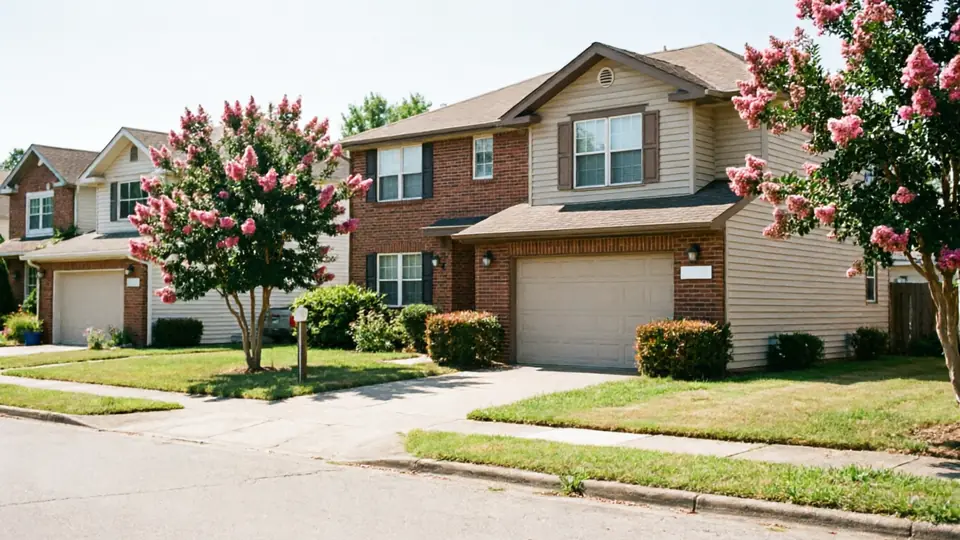
Alvin's housing stock runs 1969 to 2014, with a median build year of 1991 and most of the neighborhoods we work in dating to the 1980s and 90s. That matters for openers because almost every house from that window shipped with a chain-drive unit built to a 1990s safety standard - single infrared sensor, no rolling code, a logic board that was never built to run 25-plus years. Those boards are now at or past their design life across nearly every street in town, which is why we get the same call pattern: opener runs the motor but the door doesn't move, or the unit just hums.
The climate here is mild with occasional freeze, not the brutal swings you'd see further north, but garages in this area still see wide daily humidity swings most of the year. That moisture cycling corrodes the contacts on those original boards faster than a dry climate would, and it's a steady contributor to the failures we see on original 80s and 90s units. This isn't a problem unique to one street - it's the math of 63,961 households across this service area, a huge share of them sitting on openers original to a 1980s or 90s build, all aging out around the same time.
None of this means every call is a dead board. Some are a stripped gear, some are a bad capacitor. But the age of the housing stock is the reason opener replacement calls in this area cluster so heavily instead of spreading evenly across decades.
Where This Job Goes Sideways
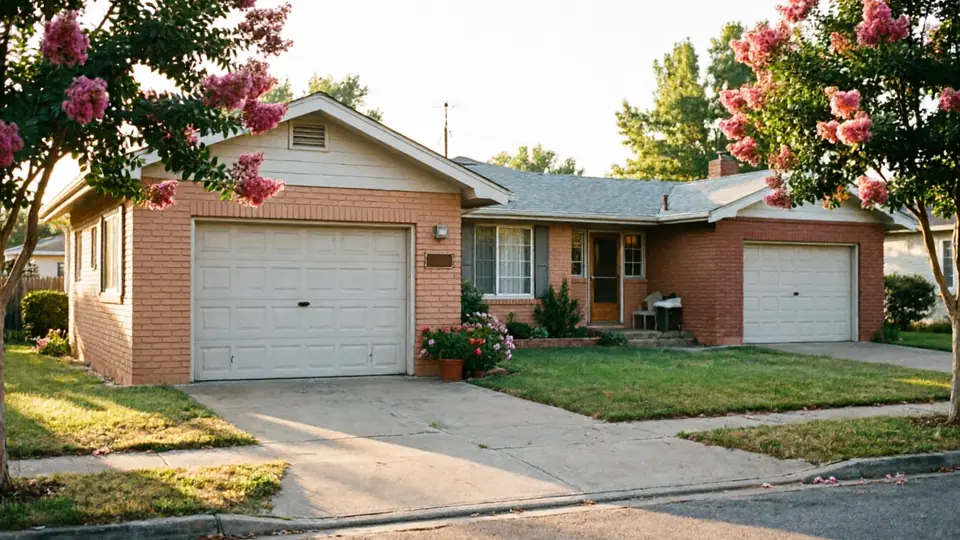
A straight opener swap on a newer door is a clean job. Where it goes sideways is the houses built earlier in that 1969-2014 range, where the original door and track were sized for a lighter, older-style opener and the garage was never wired with a dedicated outlet - just a shared circuit running the light and anything else in that bay. Add a half-horsepower belt drive and you can trip breakers you didn't expect to touch.
The other snag is header clearance. A lot of the 1980s and 90s tract construction common in this area used a shallower header than current openers assume, so a modern unit with a standard rail doesn't always clear without a low-headroom kit or bracket work. We also run into safety sensor wiring that was never brought up to the two-sensor standard - some older installs have one sensor, a jumper, or wiring run through conduit that wasn't meant to be reopened.
We won't pretend every house is a drop-in. If the track is bent, the door itself is out of balance, or the spring is near the end of its cycle count, putting a new opener on top of that is a short-term fix that fails again in a year. We tell owners that up front rather than selling a motor onto a door that isn't ready for it.
What the Repair Takes
A standard opener installation - mounting the unit, running power, setting travel limits, pairing remotes and a keypad, wiring both safety sensors to current code - is a single-visit job on a door and track that are already square and balanced. Where the house needs a dedicated outlet run or header bracket work because of the older framing common in 1980s and 90s construction here, that adds time to the same visit rather than a second trip in most cases.
Honest limitation: we don't stock every opener model and every bracket kit on the truck for every house. If your garage needs a specific low-headroom kit or a part tied to a less common opener brand, that can mean a short wait on a part rather than a same-day finish. We'd rather tell you that before we start than promise a timeline we can't hit.
We also won't install a new opener onto a door or spring system that's failing. If the spring is worn out or the track is bent, we'll say so and quote that work separately, because an opener bolted onto a bad door just fails again - and that's a worse outcome for you than a slightly longer first visit.
How It Shows Up
The most common call: the opener motor runs, you can hear it, but the door doesn't travel - that's a stripped gear or a dead drive mechanism, and it's the single most frequent failure on original 1980s and 90s units still running in this area. Close behind is a door that reverses itself partway up or down with no obstruction, which usually traces to a failing sensor or a logic board losing its memory of the travel limits.
A third pattern, more common with the moisture cycling typical of this climate band, is remote range dropping off over weeks - works fine at ten feet, then five, then not at all - before the unit stops responding altogether. Fewer owners report breaker trips, but it does happen on houses still running a shared circuit instead of a dedicated line for the garage.
If your opener light flickers before the unit fails to engage, or the wall button works but the remote doesn't, that's worth a call before it strands the car inside. None of these symptoms are dramatic on their own, which is exactly why most owners wait until the door won't move at all.
FAQ
Questions about this
How old does an opener have to be before replacement makes more sense than repair?
If the unit is original to a house built in the 1980s or 90s - which covers a large share of homes in this area - it's almost always past the point where parts are worth sourcing. We'll check the motor and board first, but on a unit that age, replacement usually costs less over time than chasing failing parts one at a time.
Will a new opener fit my garage without extra work?
Usually yes, but houses built in the 1980s and 90s sometimes have shallower headers than current openers assume, which can call for a low-headroom bracket. We check clearance before we quote so you're not surprised by an add-on once the job starts.
Do you install openers on older torsion and extension spring doors?
Yes, as long as the door and spring are in working order. If the spring is near the end of its cycle life or the track is out of alignment, we'll flag that separately rather than mount a new opener on a door that isn't ready to carry it.
Why does my remote range keep dropping before the opener fails completely?
That's a common pattern tied to the humidity cycling common in this climate - moisture works into the receiver board's contacts over time and range drops before the unit quits outright. It's worth a service call once you notice the range shrinking, rather than waiting for full failure.
Tell us what your door is doing.
We serve Alvin, TX and nearby communities. Every job starts with a diagnosis, so you know what failed before any work begins.