Garage Door Service · Alvin, TX
Garage Door Service Built Around Alvin's 1980s and 90s Housing Stock
Alvin homes mostly date to the 1980s and 90s, with original hardware now past its life. We service springs, openers, and tracks built for that era.
Why This Fails Locally
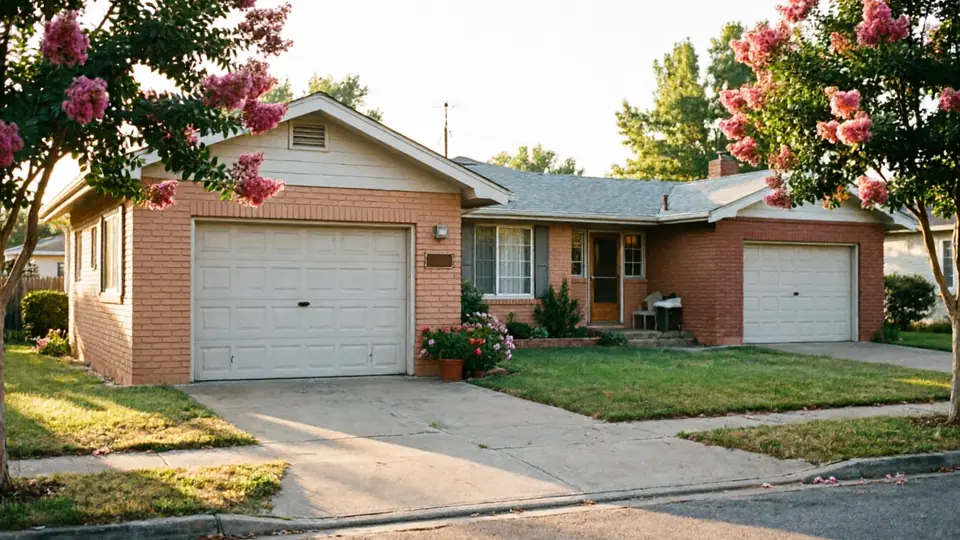
Most of the houses we work on in Alvin went up between 1969 and 2014, with the bulk of the stock landing in the 1980s and 90s. That's not a trivia point - it's why we get the calls we get. A garage door system installed in 1987 is using torsion springs, rollers, and openers that were never designed to run past the 20 to 25 year mark, and a lot of this neighborhood is sitting right on top of that line now.
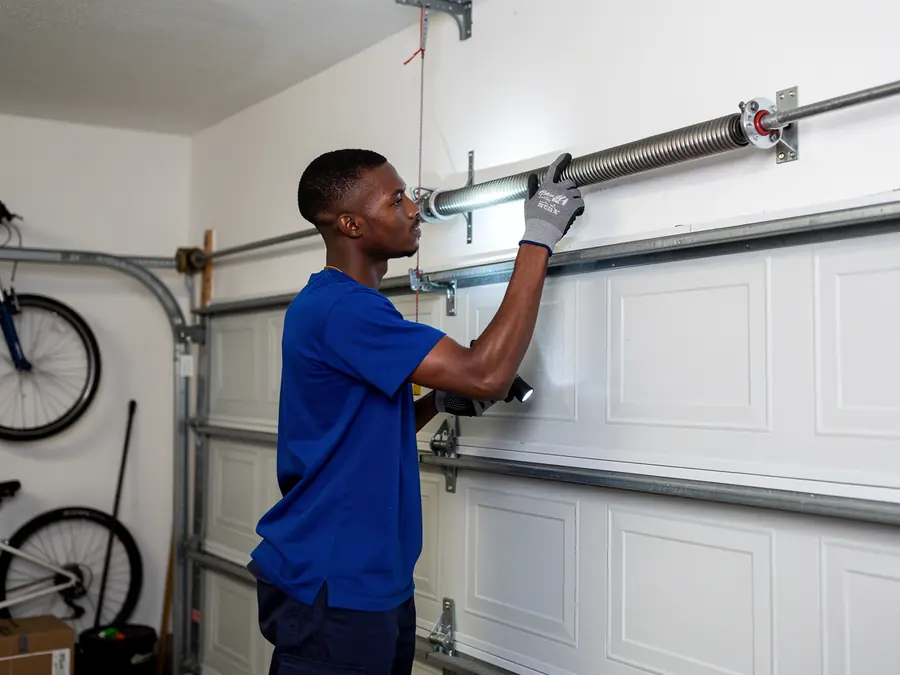
Add in the climate band here - mild most of the year but with real freeze swings a handful of times a winter - and you get metal that expands and contracts more than homeowners expect for this part of Texas. Springs that have already done 25-plus years of cycles don't handle that swing well. They don't snap because the door got heavier. They snap because the steel is tired and the cold snap was the last straw.
We see this pattern across the area, not just inside Alvin's city limits. Santa Fe, Liverpool, Manvel, and Dickinson all sit on similar-era construction, so the same failure shows up on the same kind of door, at roughly the same age, for the same reason. It's a housing-stock problem before it's ever a brand problem.
Where This Job Goes Sideways
The job goes sideways when a homeowner tries to diagnose a spring problem as an opener problem, or the other way around. On a door from this era, a tired torsion spring often throws symptoms that look electrical - the opener strains, reverses, or clicks without lifting - when the actual fault is the spring no longer doing its share of the lift. Swap the opener and the new one fails just as fast, because it's fighting the same dead spring.
The other place it goes sideways is the track and hardware. A lot of 1980s and 90s installs used hardware that isn't a direct match for what's sold today. Brackets, drums, and end bearings from that period sometimes need to be adapted rather than swapped straight across, and skipping that step is how a repair turns into a second visit.
We'll say plainly where our limit is: if the door itself has warped or the track is bent beyond a clean realignment, we're not going to keep patching it just to bill another call. At that point replacement costs less over two years than repeated repair, and we'll tell you that instead of running the meter.
What the Repair Takes
For a straight torsion spring replacement on a door from the 1980s-90s stock that's common here, we're matching spring wire size and wind to the original setup, not guessing off a generic chart. Because so much of Alvin's housing landed in that narrow build window, we carry the sizing that actually fits what's on the wall in most of these driveways - which keeps the job a single visit instead of an order-and-wait.
Opener work on houses from this era usually means checking whether the existing rail and drive are original or already a replacement unit, since a fair number of these houses have had one opener swap already in 35-plus years. We test travel limits and force settings against the actual door weight, not a factory default, because factory defaults assume a newer, lighter panel than a lot of these original doors carry.
Track and roller work on this housing stock is mostly about correcting for decades of minor settling - door openings on houses this age have shifted slightly, and a track that was plumb in 1991 often isn't plumb now. We re-square it rather than just patching the symptom.
How It Shows Up
On a house from this build era, the first sign is almost never total failure. It's a door that groans on the way up, an opener light that blinks through a cycle it used to complete clean, or a slow sag at the bottom of travel right before the spring gives out entirely. Those are fatigue signs, not random glitches, and they track with the age of the hardware more than anything else.
After one of the handful of real freeze nights we get most winters, we see a short run of spring failures a few days later - not during the cold, but once the metal has cycled through the swing a few more times. If your door started acting off after a cold stretch, that timing isn't coincidence.
We cover Alvin and the surrounding area out to places like Manvel, Dickinson, and Santa Fe, where the same build era and the same climate swing produce the same calls.
FAQ
Questions about this
Why do so many garage doors in Alvin fail around the same age?
Because so much of the housing here was built in the same narrow window, the 1980s and 90s, the original springs and openers are hitting end-of-life at roughly the same time across the neighborhood. It's less about one bad batch and more about a whole area's hardware aging out together.
Does the occasional freeze actually affect garage door springs here?
Yes. Alvin's climate is mild most of the year with a handful of real freeze swings each winter, and that expansion-contraction cycle stresses steel that's already fatigued from 25-plus years of use. We see a short bump in spring failure calls a few days after a cold snap, not during it.
Is it worth repairing an original 1980s or 90s door instead of replacing it?
Often yes, if the panel and track are still straight - springs, rollers, and openers can be replaced on original hardware without touching the door itself. If the door has warped or the track is bent past a clean realignment, repeated repair usually costs more over time than replacing the unit.
Tell us what your door is doing.
We serve Alvin, TX and nearby communities. Every job starts with a diagnosis, so you know what failed before any work begins.