Roller Replacement · Alvin, TX
Garage Door Roller Replacement - Alvin, TX
Rollers wear out fast on Alvin's 1980s-90s housing stock and mild Gulf climate. See why this fails here, what the repair takes, and how to spot it early.
Why This Fails Locally
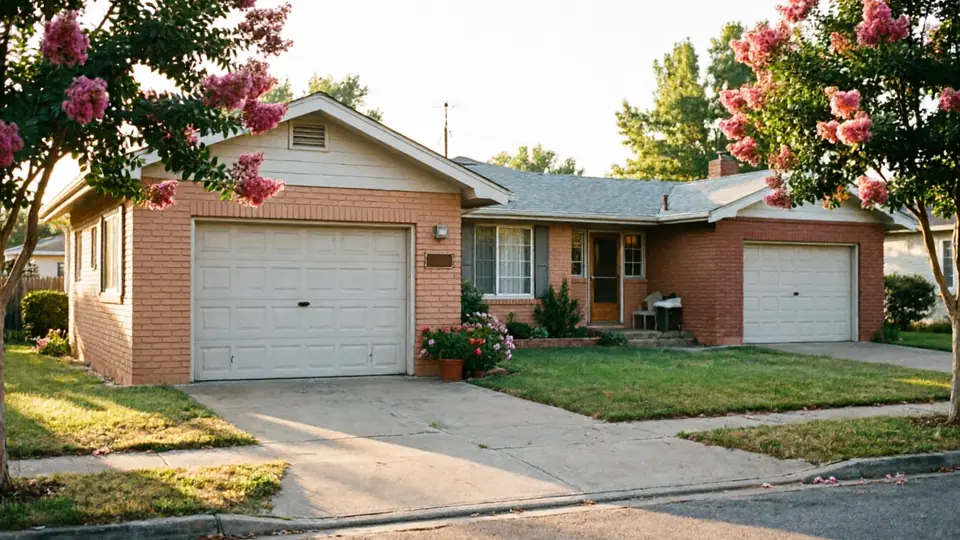
Most of the garage doors we get called on sit on houses built between 1969 and 2014, with the bulk of the stock landing around 1991. That matters because steel and early nylon rollers from that era weren't built to run past 25-30 years of daily cycles, and a lot of these doors are hitting that mark right now, all at once, because so many houses in the same subdivisions went up in the same decade.
The climate doesn't help. Alvin sits in a mild band but it's not a dry mild - you get humidity swings and the occasional freeze event mixed in. Steel roller stems rust at the shaft where grease washes out in wet stretches, and nylon rollers that spent a decade softening in heat can go brittle and crack the first hard freeze night. Neither failure mode is dramatic by itself. Together, on doors that are already at the end of their service life, they're why roller replacement is one of the most common calls we take across this whole area, not just in one neighborhood.
This isn't a problem tied to a single builder or a single street. It's a housing-stock problem: thousands of doors from the same era, in the same weather, wearing the same part out on the same schedule.
Where This Job Goes Sideways
The mistake we see most often is a homeowner replacing the opener when the real problem is the rollers dragging in the track. A worn roller doesn't always announce itself as a roller problem - it shows up as the opener straining, the door reversing partway, or a remote that seems to have gone flaky. None of that is the opener's fault if the rollers are the thing binding.
The other way this goes sideways: someone swaps the rollers but the track was already bent or out of plumb from the worn rollers grinding against it for months. New rollers in a bad track wear out again in a fraction of the time, and then it looks like the repair failed when really the track needed attention first.
We also see folks try to lubricate their way past a roller that's actually cracked or missing a bearing. Grease quiets a dying roller for a week or two. It doesn't rebuild the part. If you're spraying the track every few days just to keep the noise down, that's a roller telling you it's done, not a maintenance habit.
What the Repair Takes
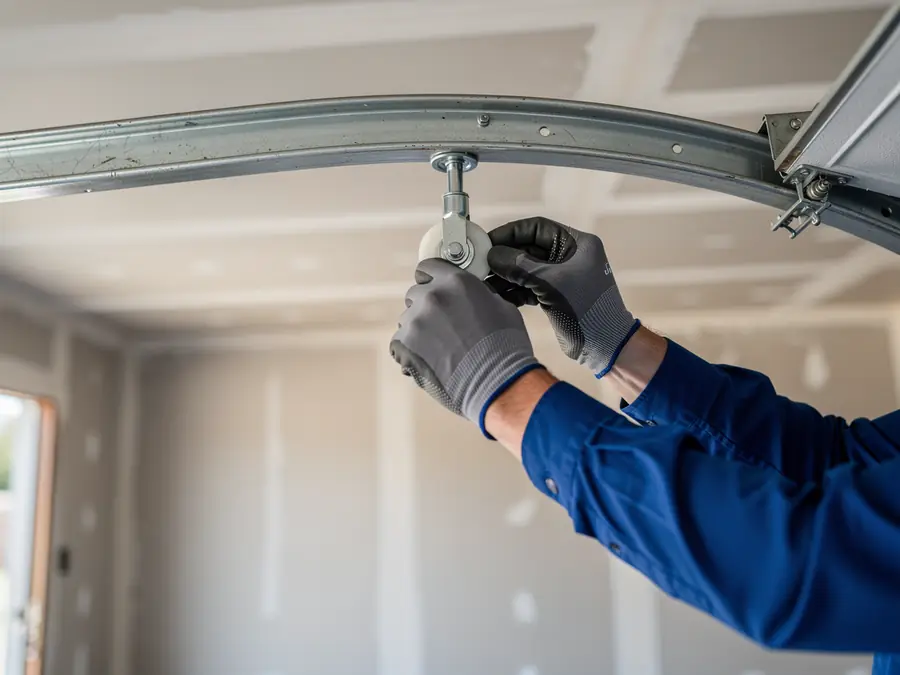
A straight roller swap on a double door with the track in good shape is a contained job: pull the old rollers, check the hinges they ride in for wear, set new rollers, run the door through a full cycle and check travel top to bottom. Nylon rollers with sealed bearings are the standard swap for anyone wanting quieter, longer-lived hardware than what a lot of these 1980s and 90s builds originally shipped with.
If the track shows wear grooves or is bent from rollers that were binding for a while, that's a separate repair, and we'll tell you before we start if that's what we're looking at - we don't swap rollers into a track that's going to chew them up again in six months. That's the one limitation worth saying plainly: rollers fix rollers, not a bent track, and we're not going to bill you twice by pretending otherwise.
Most jobs finish in one visit. Specialty rollers for unusual door weights or wide commercial-style panels sometimes need a day or two to source, and we'll say so up front rather than guess.
How It Shows Up
The classic sign is a grinding or rattling noise right as the door starts moving, loudest near the bottom panel where older rollers take the most load. A door that used to glide now jerks at certain points in the track, or hesitates and then lurches forward. Some homeowners notice the door looks slightly crooked as it closes - one side dragging a beat behind the other because a roller on that side has seized or cracked.
Across the 63,961 households and 43,610 owner-occupied houses in this service area, this is one of the most common reasons a door gets a service call rather than a full replacement. It's a wear-item repair, not a sign something's structurally wrong with the door itself, and most of the time it's cheaper and faster to fix than people expect once they're staring at a door that won't close evenly.
FAQ
Questions about this
How do I know if it's the rollers and not the opener?
If the door struggles, reverses, or makes grinding noise but the opener runs fine on its own (listen for the motor working harder than usual), the drag is usually mechanical - rollers or track - not the opener. We check both before replacing either.
Can I just replace the rollers that look worst?
You can, but rollers on a door wear at close to the same rate since they're on the same door riding the same cycles. Replacing the whole set at once is usually more cost-effective than coming back in a year for the rest.
Will new rollers fix a noisy door by themselves?
Often yes, if the track and hinges are sound. If the track is bent or grooved from worn rollers dragging for months, the track needs attention too - we'll tell you which one you're dealing with before starting work.
How long do new rollers typically last?
That depends on the roller type and how many cycles the door sees, which we don't have exact figures for here. Sealed nylon rollers generally outlast older steel ones under the same conditions.
Tell us what your door is doing.
We serve Alvin, TX and nearby communities. Every job starts with a diagnosis, so you know what failed before any work begins.