Garage Door Repair · Fresno
Garage Door Repair for Fresno's 2006-era Houses
Fresno's houses mostly went up around 2006, so the openers and rollers failing now are builder-grade units hitting the end of their service life, not old hardware.
Time on the Job
We run this job out of Alvin, about 17 miles from Fresno, so when we quote a window we're accounting for that drive, not promising a depot around the corner. Most of the repair calls we get from Fresno aren't about old hardware failing from age the way they might be in an older part of the county. Fresno's housing stock is newer than the surrounding area's - a lot of it went up around 2006, well after the 1991 median build year for the wider service territory. That matters because it means a specific generation of builder-installed garage door equipment is now reaching the point where it wears out, all around the same few years, which is exactly what we're seeing show up on the schedule.
A garage door opener installed when a house is built usually runs 15 to 20 years before the gear set, circuit board, or logic board gives out. Houses finished in 2006 are hitting that window right now. Same story with torsion springs rated for a specific door weight - cycle counts add up whether the house is old or new, and a spring installed new construction-era isn't exempt from fatigue.
How It Shows Up
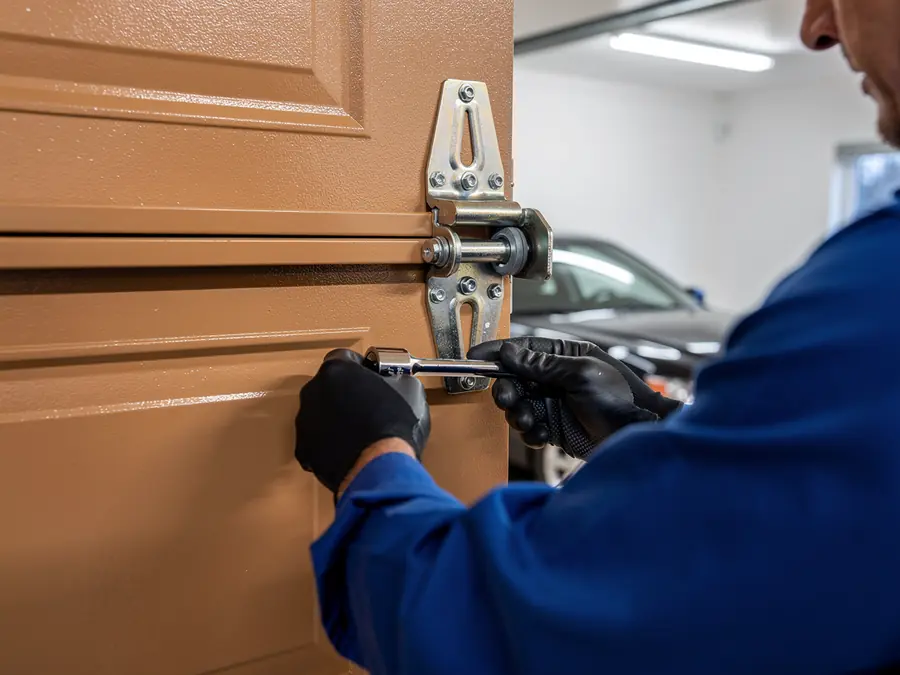
The calls we get from this part of the territory tend to follow a pattern: the opener runs but the door doesn't move, or it moves partway and reverses. That's usually a worn gear inside a builder-grade opener unit, not a spring problem. Chain-drive openers installed during the mid-2000s building boom used a lighter-duty gear and sprocket than what gets installed today, and after a decade and a half of cycles, that gear strips.
We also see steel rollers on these doors starting to groove and bind in the track, which shows up as a door that's noisy going up but not obviously broken - homeowners often live with it for months before calling. Less common but real: keypad and remote receivers from that era losing sync as the board ages, which looks like a dead remote when it's actually a dying circuit board.
Why This Fails Locally
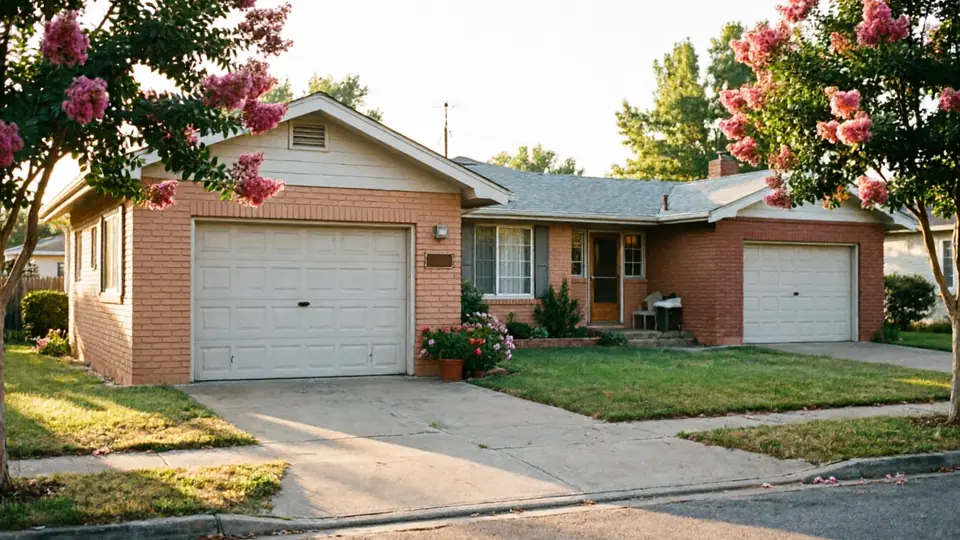
This isn't about heat or storms - the climate here is mild with occasional freeze, and that's not what's driving these calls. It's the build date. A big share of Fresno's garage doors and openers are original to houses finished in the same handful of years, which means a big share of them are going to hit end-of-service-life in the same handful of years too. We're not describing a random failure pattern; we're describing a cohort of equipment aging out together.
Household income in this part of the territory runs a bit higher than the broader service area median, and we mention that only because it tends to shape the decision homeowners make here: more of them choose to replace an aging opener outright rather than patch a 2006-era gear set with a universal part that doesn't quite match the original mounting.
Where This Job Goes Sideways
The mistake we see most in Fresno is someone replacing just the remote or just the keypad when the actual fault is the receiver board inside the opener head. That fixes nothing and the call comes back a month later. Another one: a homeowner hears grinding and assumes spring trouble, pays for a spring swap, and the door still binds because the real issue was a bent roller track, not the spring at all.
We also run into doors where a previous repair used a universal opener gear kit that technically fits but runs louder and wears faster than the manufacturer part, because the original opener model from that building period isn't something every supplier stocks anymore. We'll tell you straight if that's what you're looking at before we put a part on the door.
Stocked Parts
We carry common torsion springs, standard steel rollers, and cable for the sizes of garage doors that match what went into houses around this part of the county during the mid-2000s. For openers, we stock the gear-and-sprocket kits that fit the chain-drive units most common to that construction era, plus standard safety sensors.
What we don't always have on the truck is a specific circuit board or receiver module for an opener brand that stopped being common after that building run ended - those sometimes take a day or two to source. We'll tell you on the first visit if your opener falls into that category instead of guessing and making you wait twice.
The DIY Question
Swapping a remote battery or reprogramming a keypad code is fine to try yourself before calling anyone. Replacing a torsion spring is not - the spring on a standard double door is wound under enough tension to break bones or worse if the winding bars slip, and that's true whether the door was installed in 2006 or 1986.
If your opener is grinding, reversing, or just slower than it used to be, that's a gear or board issue, and taking the opener head apart without knowing what you're looking at usually turns a one-part repair into a full opener replacement. Call it in and we'll tell you honestly whether it's a part swap or time for a new unit.
FAQ
Questions about this
Why is my opener failing now if the house isn't that old?
Most houses in this part of Fresno were built around 2006, and builder-installed openers from that era typically last 15 to 20 years before the gear set or circuit board wears out. If your house dates from that window, your opener is right in the range where that failure shows up, regardless of how new the house feels otherwise.
Do you have a shop in Fresno?
No. We run this job out of Alvin, about 17 miles away, and we're upfront about that distance when we schedule. We don't claim a local branch or depot in Fresno because we don't have one.
Is it the spring or the opener when the door won't open?
If the opener motor runs but the door doesn't move or reverses partway, that's usually a worn opener gear, not the spring. A spring problem typically shows up as the door being heavy to lift by hand or sagging unevenly. We check both before replacing anything.
Can I just replace the remote if it stops working?
Sometimes, but in houses from this building era we often find the real fault is the receiver board inside the opener aging out, not the remote itself. Replacing the remote alone in that case won't fix it, and you'll be back to square one within weeks.
Tell us what your door is doing.
We serve Alvin, TX and nearby communities. Every job starts with a diagnosis, so you know what failed before any work begins.