Garage Door Installation · Fresno
New Garage Door Installation for Fresno, TX Homes
Fresno's homes mostly went up after 2000, which means wider builder-grade double doors on standard torsion springs. Here's what installation looks like for this stock.
Time on the Job
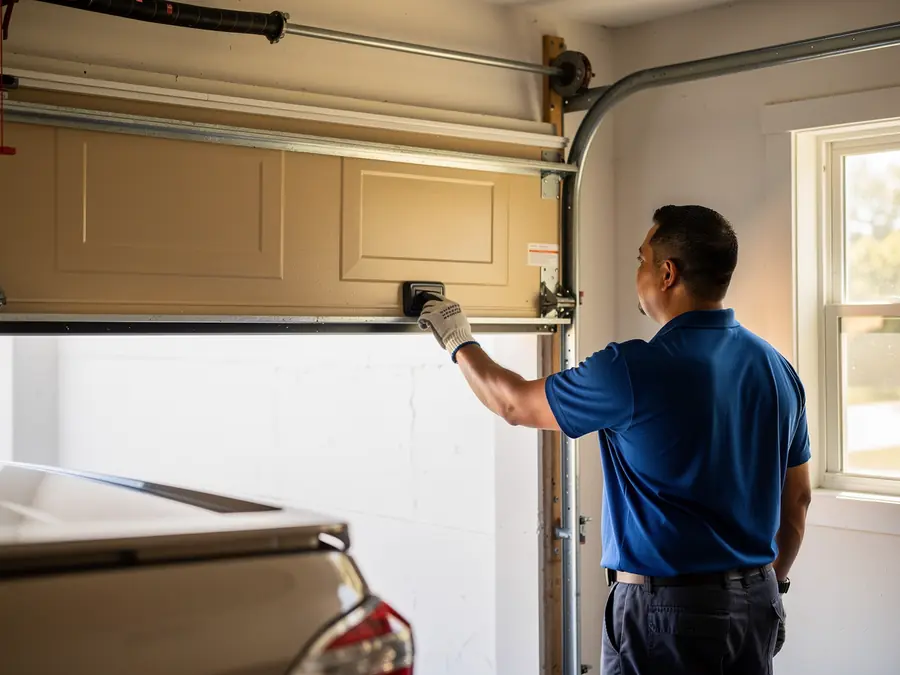
Fresno is newer than most of the towns we work in out of Alvin. The typical house here went up around 2006, which puts it squarely in the subdivision-building boom rather than the older farmhouse stock you find closer to the coast. That means the garage itself is usually a wider two-car opening, built to a standard builder spec: 16-foot steel sectional door, factory-primed, light gauge panel skin, and a torsion spring sized to whatever the production-home contractor ordered in bulk. These aren't custom doors. They were picked from a catalog to hit a price point on a new-construction budget, and that shows up later in the kind of failures we see. A door built in 2006 is now entering its second decade, old enough for the original rollers, cables, and weatherseal to be worn out, but not so old that the opening itself is undersized or the hardware is obsolete. That's a good position to install from - you're not fighting a strange old frame, you're replacing a known quantity.
How It Shows Up
On a 2006-era builder door, the first sign is usually the panel, not the spring. Thin steel skins from that production run dent easily - a bike pedal, a trailer hitch backing in, a basketball off the rim - and once one panel is bowed, the track binds and the opener starts straining on every cycle. The second sign is noise: the stamped-steel rollers that shipped standard on builder-grade doors wear oval over ten-plus years and start rattling in the track instead of rolling through it. Neither of those means the whole door needs to go, but if you're also hearing the opener motor lug hard on lift, that's the spring, and on a double door that size it's not a job to guess at.
Why This Fails Locally
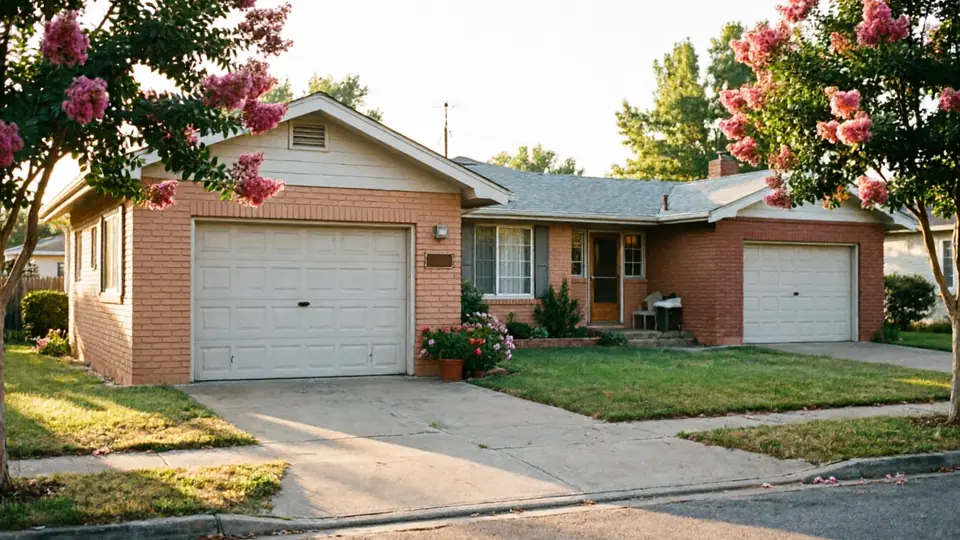
This area sits in a mild climate band with occasional freeze, not the hard freeze-thaw cycling that cracks concrete pads or seizes steel up north, but enough humidity swing to matter. Garage doors here don't fail from cold - they fail from moisture working into the bottom seal and the panel seams over years of swelling and drying. Combine that with builder-grade steel that was never meant to be a 20-year door and you get bottom-panel rust starting from the inside out, usually invisible until the door's already sagging on that corner. It's a slower failure than what you'd see in a harsher climate, which is partly why a lot of Fresno homeowners are only now, with these houses in their second decade, starting to deal with it.
Where This Job Goes Sideways
The wider double-car opening that's standard on Fresno's newer construction changes the math on installation. A 16-foot door carries more dead weight than the single 8 or 9-foot doors common on older housing stock, which means the torsion spring has to be matched correctly to that width and the door's actual weight - not just swapped for whatever was on the shelf. We also run into openers that were installed by the builder at the minimum spec for the door, which is fine until you want a heavier insulated replacement door and the opener can't lift it reliably anymore. That's a conversation worth having before the new door goes in, not after it's hung and straining.
Stocked Parts
Because so much of Fresno's housing went up in the same building window, the hardware sizes repeat house to house - 16-foot and 9-foot steel sectional openings, standard torsion spring ranges, common roller and cable sizes. That consistency means we can usually carry what a typical Fresno install needs on the truck from Alvin rather than special-ordering. Where it gets slower is custom widths, carriage-style doors, or anything outside the builder-standard sizing - those get ordered in and the timeline stretches.
The DIY Question
A full door swap on a 16-foot double isn't a solo weekend project, and we'll say that straight: the panel weight and the spring tension on an opening that size are not forgiving of a bad guess. Where it's reasonable to do it yourself is small stuff - weatherstrip, a worn roller here or there, tightening track brackets. Anything involving the spring, the opener mounting, or taking the old door down whole is where the injury numbers come from, and it's also where a mis-sized spring on a wide door turns into a second service call that costs more than doing it right the first time.
FAQ
Questions about this
Why does my garage door feel heavier than my neighbor's on the same street?
If your house and theirs were built in the same wave of construction, the doors are usually the same spec, so a heavier feel often means your spring has weakened or lost tension over time rather than a difference in the original door. Worth having it checked before the opener motor burns out trying to compensate.
Is a dented steel panel worth replacing by itself?
On a builder-grade sectional door, sometimes yes - a single bowed panel can be swapped if the model is still available and the rest of the door is sound. If the door's original to a 2006-era build, matching the exact panel can be hit or miss, and a full section or door replacement sometimes ends up simpler.
Do you have a shop or crew based in Fresno?
No. We run out of Alvin and drive out to Fresno for jobs, about 17 miles each way. There's no local branch here, just a truck that comes when you call.
Will a new insulated door work with my original builder opener?
Not always. Builder-installed openers were often sized to the minimum needed to lift the original door, and a heavier insulated replacement can overload that motor. We check the opener's lift capacity against the new door's weight before installing, not after.
Tell us what your door is doing.
We serve Alvin, TX and nearby communities. Every job starts with a diagnosis, so you know what failed before any work begins.