Garage Door Service · Fresno
Garage Door Service for Fresno's 2006-Era Homes
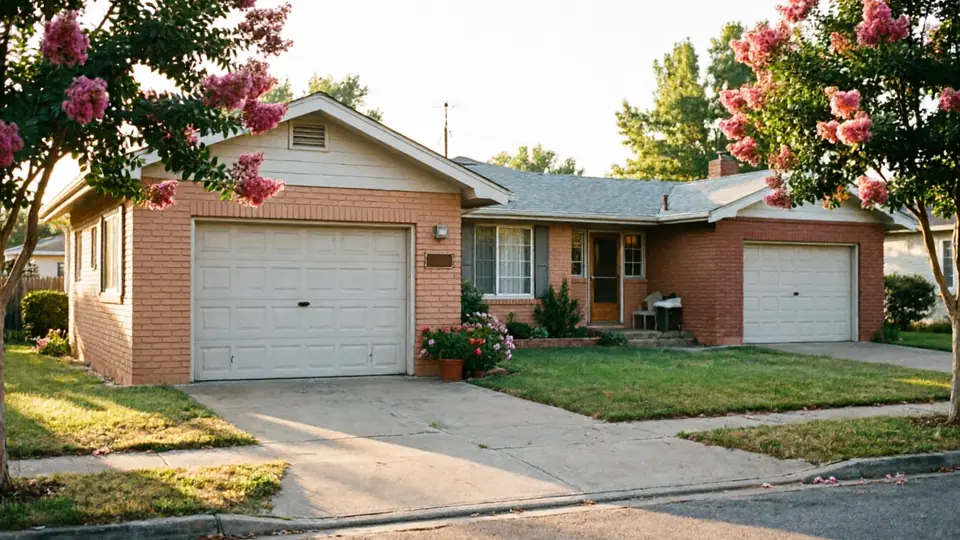
Fresno's homes cluster around a 2006 build year, nearly 15 years newer than the rest of the service area. We work on the openers and springs that came with that generation of house.
Time on the Job
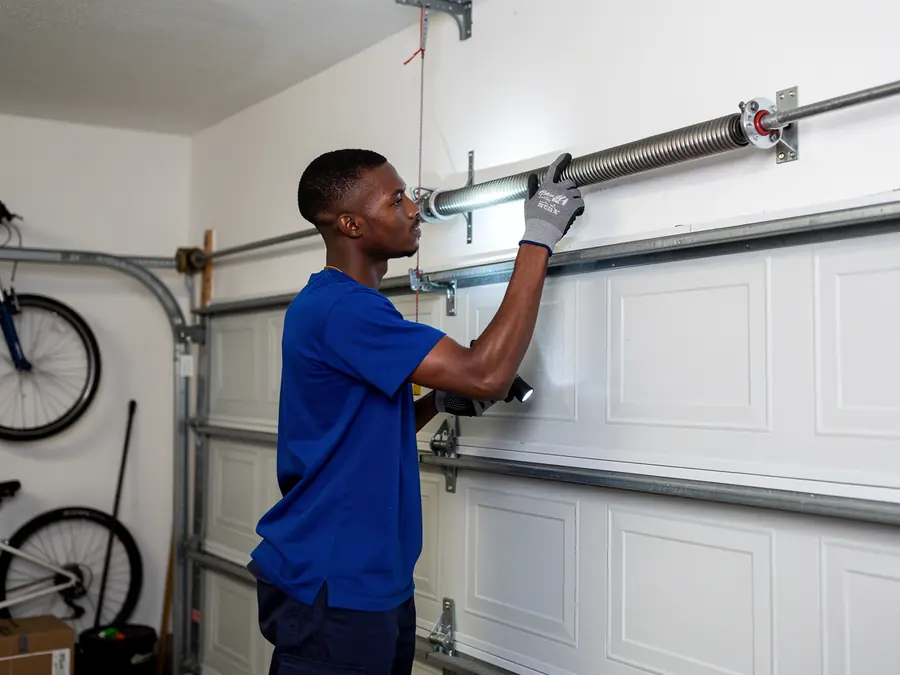
Most houses in Fresno went up around 2006, which puts this neighborhood a good fifteen years ahead of the 1991 median you'll find across the rest of the Alvin Garage Door Pros service area. That matters more than it sounds like it should. A door and opener installed in 2006 is now pushing nineteen years old, and in a lot of these houses, it's still the same unit the builder put in. Nobody's touched the spring. Nobody's touched the opener logic board. The original rollers are still in the track because the door still closes, mostly, and "still closes" is not the same as "still safe." We come out from Alvin, seventeen miles up the road, and what we find in Fresno garages is pretty consistent: builder-grade torsion springs rated for about 10,000 cycles, now well past the point where a homeowner should be gambling on one more open-close cycle before it lets go. It's not that these homes have been neglected. It's that 2006 construction is old enough to have original hardware wearing out, but new enough that most owners assume everything's still "basically new." It isn't.
How It Shows Up
The failure pattern in Fresno looks different from what we see on older housing stock. You're not fighting rust-seized hinges from a 1970s door. You're fighting fatigue on parts that were fine for the first fifteen years and are now just done. A torsion spring that's been cycled twice a day for close to two decades will start giving you a door that feels heavier on the way up, or an opener that strains and clicks before it catches. Nylon rollers from a 2006 build are plastic, not steel, and by now they're often cracked or chipped, which shows up as a grinding or clunking sound right at the point where the door passes the bend in the track. Opener boards from that era are also starting to fail outright - not a slow decline, just a dead unit on a Tuesday morning. None of this is dramatic. It's wear catching up to a house that's old enough to need the work but young enough that the owner wasn't expecting it yet.
Why This Fails Locally
The climate here runs mild with the occasional freeze, which isn't hard on hardware the way a true freeze-thaw cycle is, but it does mean grease and lubricant on original rollers and hinges have had nineteen years to gum up, dry out, and collect dust without anyone ever re-lubricating them. Builders in 2006 used a standard-grade torsion spring sized for the door weight at the time, not for a two-decade service life, and that's the part that's aging out across Fresno right now, roughly on schedule. This isn't a defect specific to any one builder - it's just what happens to a standard-issue spring at year eighteen or nineteen. The households here report a median income north of what you'd expect for deferred maintenance to be about cost, but it's often just not top of mind until the door fails.
Where This Job Goes Sideways
The job gets harder when a homeowner tries to replace just the spring and leaves the rest of the original 2006 hardware in place. A new spring paired with worn-out rollers and a cable system that's stretched over nineteen years of cycles doesn't balance right, and the door will come back out of adjustment within weeks. We also run into openers where the motor still runs but the safety reversal sensors - standard since well before 2006 but often never tested since install - don't trip correctly anymore. That's not a part you patch around. If the sensors don't work, the opener doesn't get reinstalled until they do, full stop. And on a few of the larger original double doors in Fresno, the drum and cable sizing from the builder era doesn't match what's commonly stocked today, which means we sometimes have to special-order to get it right rather than force a near-match.
Stocked Parts
Because Fresno's housing is concentrated in that mid-2000s window, the truck carries what that generation of door actually needs: torsion springs sized for standard builder-grade double and single doors, steel ball-bearing rollers to replace the original nylon ones, and standard safety sensor pairs for openers from that era. What we don't always have on the truck is an exact cable or drum match for a handful of the larger original double-door setups - those sometimes need a short order, and we'll tell you that up front rather than force a part that's close enough.
The DIY Question
A torsion spring under tension is not a weekend project, in Fresno or anywhere else - that's true regardless of the age of your door, and it's the one place we won't talk a homeowner through doing it themselves. Where DIY does make sense here: if your door is from the 2006 wave and the only symptom is a dry, squeaky roller sound, lubricating the track and hinges yourself is reasonable and cheap. But if the door feels heavy, drops fast, or the opener strains before it catches, that's spring fatigue talking, and on a door this age, it's closer to end-of-life than a quick fix.
FAQ
Questions about this
Why does my garage door from 2006 suddenly need work when it's always been fine?
Builder-grade torsion springs are usually rated around 10,000 cycles, which works out to roughly fifteen to twenty years of normal use. A 2006 door is right in that window now. It's not damage, it's just the hardware reaching the end of its rated life on schedule.
Do you have a branch in Fresno?
No. We run out of Alvin, about seventeen miles away, and come out to Fresno for service calls. There's no local depot, just the truck making the drive.
Are the rollers on my original door worth replacing or should I replace the whole door?
If the door panels, track, and opener are otherwise sound, swapping original nylon rollers for steel ball-bearing ones is usually worth it on its own. Full replacement only makes sense once the spring, cables, and opener are all failing together.
Is the freeze risk here something I need to worry about with my door?
This area sees occasional freezes but not sustained hard freeze-thaw cycles, so it's not the main driver of wear here. Age and cycle count on the original hardware matter more than the mild winters.
Tell us what your door is doing.
We serve Alvin, TX and nearby communities. Every job starts with a diagnosis, so you know what failed before any work begins.