Garage Door Service · Santa Fe
Garage Door Repair & Installation for Santa Fe, TX Homes
Garage door repair in Santa Fe, TX, 8 miles from Alvin shop. Most homes here date to the early 1990s, which shapes the springs, cables, and track we stock.
Time on the Job
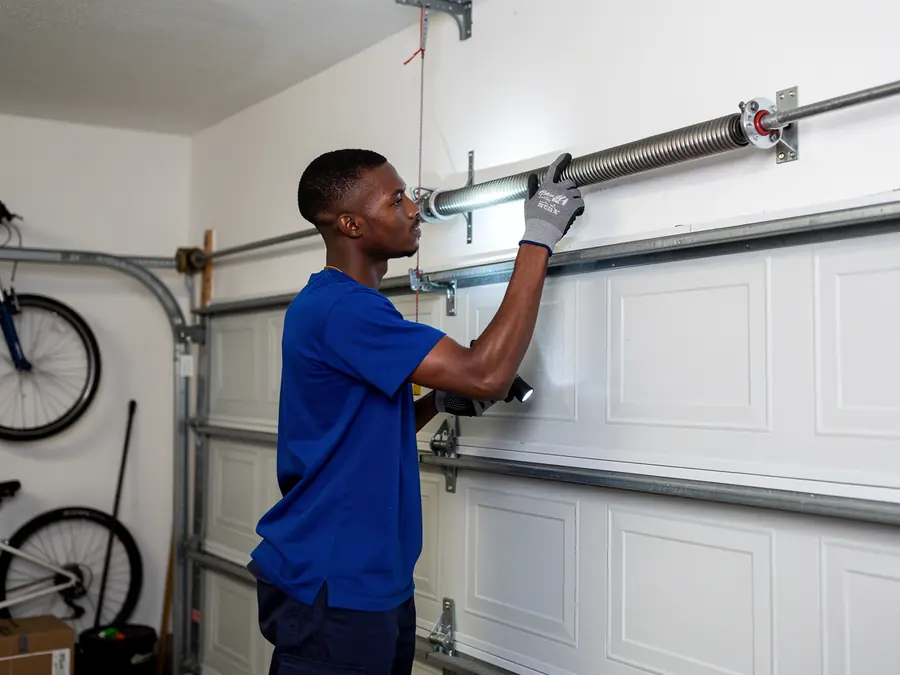
Santa Fe's median household income is $95,815, well above the $85,730 median across the territory we run from Alvin, and comfortable enough that a repair here is almost never put off until it fails outright. That matters, because the clock on a garage door job starts the moment a spring lets go, not whenever it's convenient. The housing stock out here follows the general build pattern for the area, going up between 1969 and 2014, and 1991 is the median year built here, putting it right at the center of our regional range. Doors from that era run torsion springs on a single bracket, not the dual-spring setups common in newer builds, and the drums and cable routing wear to a particular pattern we recognize fast. A straightforward torsion spring swap takes under two hours once we're on site; what adds time is matching an old drum size or a cable gauge that stopped shipping standard years back. We drive the 8 miles out from Alvin with that in mind and bring the parts most likely to fit before we knock on the door.
The Cost of This Job
We don't quote a number here that isn't backed by what we see on site, so take this as how the decision breaks down rather than a price list. At a median income of $95,815, Santa Fe homeowners are more often than not fixing the door rather than replacing it outright - the repair math works because the springs, rollers, and openers on a 1991-era door are still serviceable parts, not relics. Replacement starts to make more sense only when the door itself is failing - panels rusted through, track bent beyond adjustment - rather than the moving parts around it. One honest limitation: if your opener is original to a 1991 build, we may not be able to get a drop-in replacement part for the logic board, and a full opener swap becomes the cheaper, faster fix even though the door and track are fine. We'll tell you that on site rather than string out a repair that won't hold. For most of the calls we take in Santa Fe, the job is a spring, cable, or roller repair, not a full door replacement, and the income level here tends to support doing it right the first time instead of a patch job.
The DIY Question
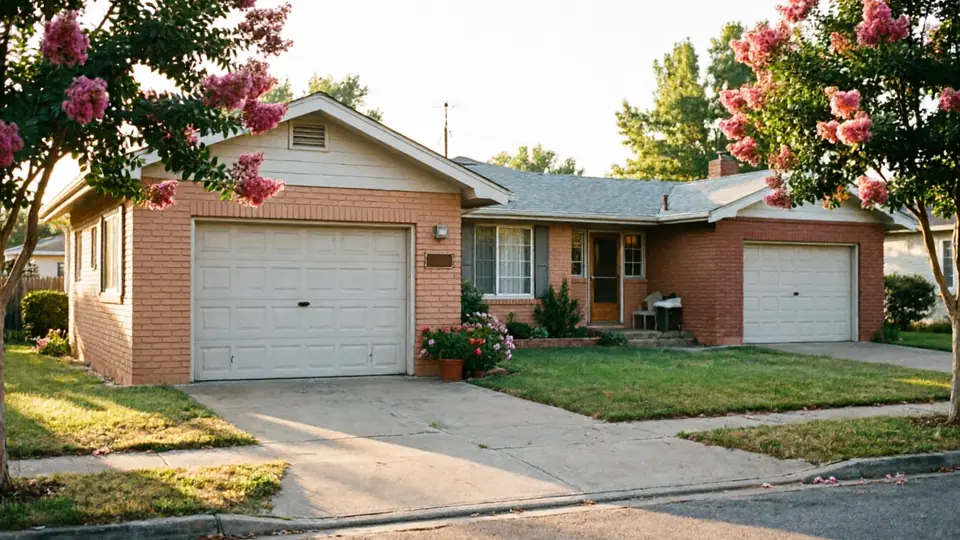
A torsion spring holds enough stored tension to break a bone or worse, and that doesn't change because the door is older or newer. We'd rather lose the job than have someone get hurt winding a spring with the wrong bar or no bar at all. Where DIY does make sense: tightening hinge bolts, lubricating rollers and the track, replacing weatherstripping, clearing a sensor that's been bumped out of alignment. None of that requires unwinding anything under load. Where it doesn't: springs, cables, the bottom bracket, or anything that involves the torsion tube itself. On a house built around 1991, the spring and drum sizing often doesn't match what's sold off the shelf at a hardware store, so even a motivated DIYer buying the wrong spring winds up calling a tech anyway, just after spending money twice. If your opener has started reversing on its own or grinding before it lifts, that's a sign the spring is already compensating and not a DIY troubleshooting job. Call before it drops.
What the Repair Takes
Most Santa Fe calls follow the same order: check the spring tension, check the cable condition, check the track alignment, then look at the opener. Houses from the early 1990s typically run a single torsion spring on a center bracket, steel tracks bolted rather than riveted, and openers with chain or belt drives depending on when the door itself was last replaced. A spring job means releasing tension, pulling the old spring and bearing plate, matching wire size and wind direction, and resetting the torsion to the door's actual weight - guessing on wind count leaves the door off-balance and burns out the opener motor early. A cable replacement means checking the drum for grooves where the old cable sat, since a mismatched replacement cable slips off a worn drum. This area runs a mild climate with the occasional freeze, which doesn't crack springs the way hard freeze-thaw regions do, but it does mean rust develops slowly on hardware that doesn't get wiped down, especially where humidity sits against unpainted steel brackets. We check for that even on calls that come in for something else.
Where This Job Goes Sideways
The call that starts as 'the door won't open' sometimes turns out to be three separate problems stacked on top of each other - a stripped gear on the opener, a worn roller binding the track, and a cable that's one strand away from snapping. Each one by itself is a quick fix. All three together is why a job we quoted at one length on the phone runs longer once we're actually looking at the hardware. On older housing stock like what's common around Santa Fe, we also see bent track from a car bumping it over the years, which won't show up until the door's already been worked on for something else. The other way this goes sideways: a homeowner has already tried tightening the spring themselves after watching a video, and the wind count is now wrong in a way that's hard to diagnose from the symptoms alone. We're not going to pretend every job is the quick version advertised on a flyer. We'd rather tell you upfront that a second issue showed up than close out the invoice and let you find out later.
Stocked Parts
We carry torsion springs across a range of wire sizes on the truck, standard track sections, rollers in both nylon and steel, and the cable gauges that fit the drum sizes common to doors from the 1980s through 2014 - the build window that covers most of what's out in Santa Fe. What we don't carry on the truck: proprietary opener logic boards for discontinued models, which sometimes have to be special-ordered, and custom panel sizes for doors that were never a standard width to begin with. If a part has to be ordered, we'll say so rather than let the truck roll back from Alvin a second time without warning. For the common jobs - spring, cable, roller, weatherstrip - we're stocked to finish in one visit, which keeps the 8-mile trip out here from turning into two.
FAQ
Questions about this
How far is Alvin Garage Door Pros from Santa Fe?
Santa Fe is about 8 miles from our shop in Alvin, close enough that we don't build a separate trip charge into most jobs out here. We stock the parts most doors from this area need before we leave, which keeps the drive from turning into two visits for a routine spring or cable repair.
Do you replace garage door openers in Santa Fe?
Yes. If the logic board on an older opener is discontinued and can't be sourced as a drop-in part, a full opener swap is usually faster and cheaper than chasing a part that may not exist anymore. We'll tell you on site which situation you're in before we start any work.
Is my garage door spring repairable or do I need a new door?
Almost always repairable. At the income level and housing age typical in Santa Fe, the spring, cable, and roller hardware on a 1991-era door is still standard serviceable gear, not something that forces a full door replacement. Replacement only makes sense when the door panels or track itself have failed.
What's the most common garage door problem you see in Santa Fe?
Torsion spring wear and cable fraying on doors from the early 1990s build era, often paired with a roller that's binding in the track. One symptom alone is a quick job; when two or three show up together, the visit runs longer than a single-issue repair would.
Tell us what your door is doing.
We serve Alvin, TX and nearby communities. Every job starts with a diagnosis, so you know what failed before any work begins.